Politics and Persuasion: Soka University Students Explore the State of Nuclear Disarmament
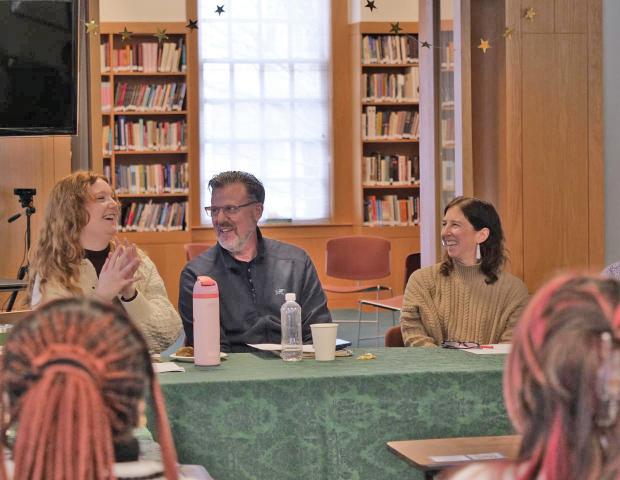
McGinty, Christ, and Linakis
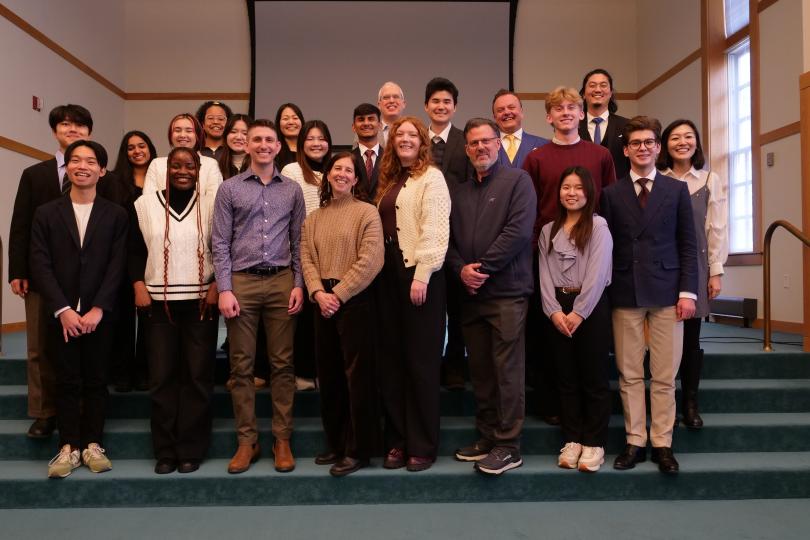
For the third year in a row, in January 2026 students from Soka University of America (SUA) visited Boston and the Ikeda Center for several days of seminars and discussions devoted to exploring key issues and best practices in the cause of global peacebuilding. Last year they explored the power and promise of interfaith dialogue. This year they did a deep dive into the state of the global movement for nuclear disarmament.
The 12 attending students all were participants in SUA’s Learning Cluster studying the topic of Nuclear Disarmament Education. The cluster was taught by Professor Alexander Harang, who also accompanied the students. During their stay in the Boston area they engaged in dialogue with Professor Jim Walsh of MIT and nuclear disarmament youth activist Talia Wilcox who used to work with Dr. Walsh; attended a session with Dr. David C. Logan at Tufts University; attended a panel discussion with members of International Physicians for the Prevention of Nuclear War (IPPNW) and Greater Boston Physicians for Social Responsibility (GBPSR); had a virtual exchange with Eddie Laiche and Maria Udalova of Students for Nuclear Disarmament; and participated in student-to-student exchanges with the Buddhism In Action club at Harvard Kennedy School.
To provide a representative look at the sorts of issues the students engaged with during the week, extending from the personal to the political, this report by Mitch Bogen will focus on the IPPNW/GBPSR panel.
Panel Discussion: Politics and Persuasion
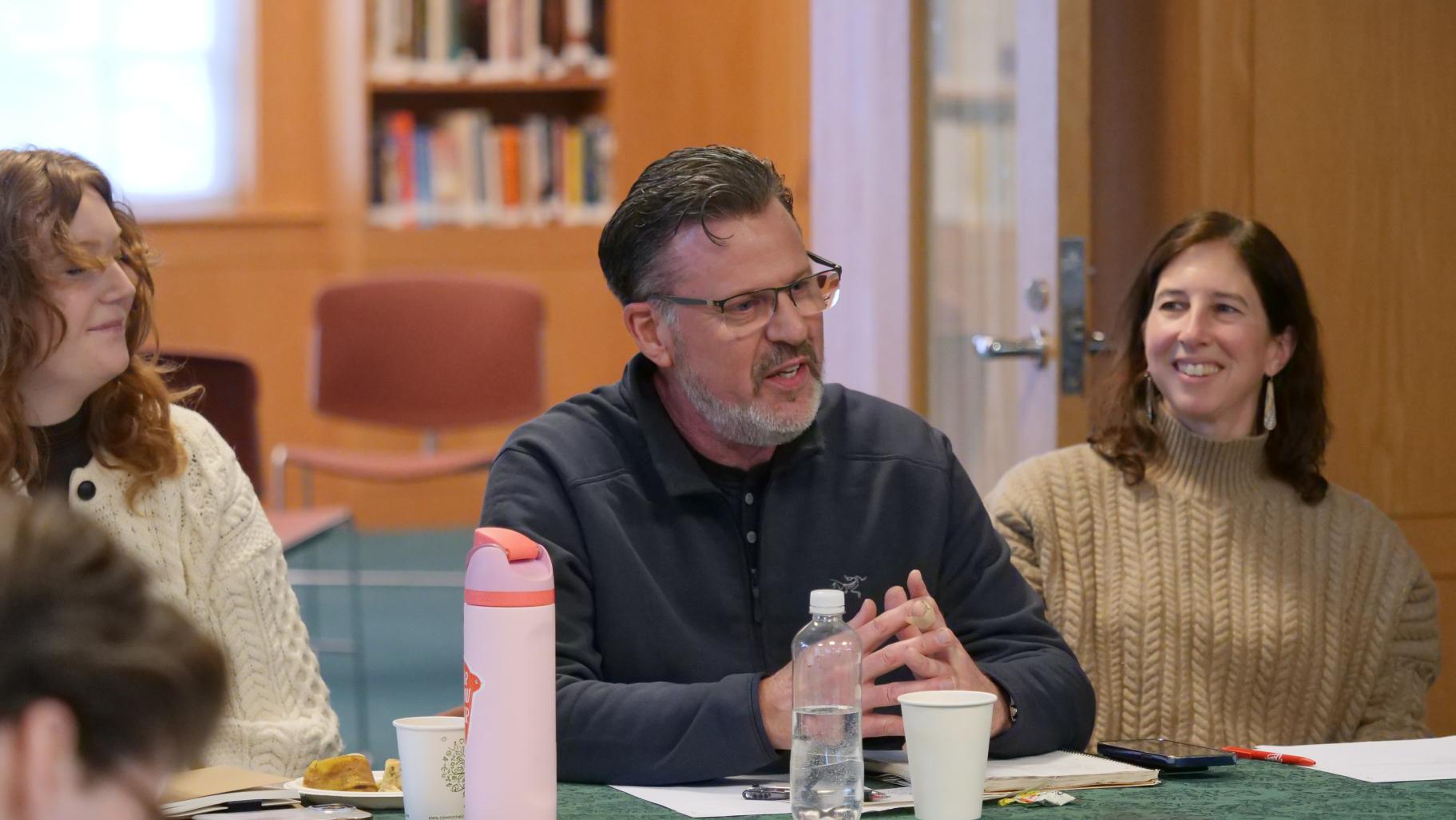
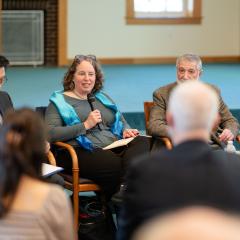
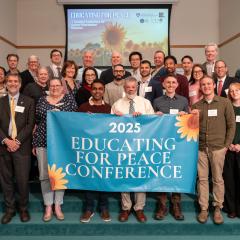
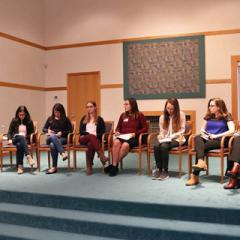
The January 22 panel discussion, held at the Ikeda Center and moderated by Center Senior Peace Researcher Alexander Harang, gave students the opportunity to engage with four nuclear disarmament experts: Michael Christ and Molly McGinty of IPPNW, and Anna Linakis and Joe Hodgkin of GBPSR. After introductions, the panelists spoke to the topic of what they find most exciting and rewarding about their work. Speaking first, Linakis said that she is grateful to work with people who are able to take actions toward disarmament that give them hope for the future. Indeed, she said she “feels bad” for those who feel they don’t have any “mechanism for action.” Reflecting on her own experience, she said that she is inspired every time she organizes the Boston-area volunteers of Back from the Brink, realizing this is “somebody who’s taking their time, their hours to connect with us and who wants – I keep getting emails from people say[ing], I want to do more. What else can I do?” For her, this is nothing less than “a way to survive” in “this crazy world we have.” Saying he resonated with Linakis’s thoughts, Christ added that he is grateful for the “opportunities to travel and meet the most incredible people, inspiring people, brilliant people, loving people all around the world, and to learn from them and to share with them and to learn about other perspectives and other cultures.” In short, making “good friends” along the way. And, speaking as someone in the later stages of his career, he expressed gratitude for all the young people joining the movement who will carry the work forward. McGinty said that she especially appreciates how working for nuclear disarmament connects with everything she cares about in terms of “human progress”: climate, access to food and clean water, decolonization and indigenous rights, and much more. And “the topics are never dull,” she said. “And whenever I meet a new person, there’s a new way of looking at this issue. So, I find it to be both life giving and rewarding.”
Considering the Politics of Global Disarmament
During the discussion – including both moderator questions to the panelists and a Q&A session with participants – two main themes emerged. The first had to do with the role and interplay of international agreements and organizations in achieving abolishment. Call it the politics of disarmament. The second had to do with the centrality of humanitarian concerns in persuading people to join the cause, an effort that benefits from knowing and respecting your audience. Molly McGinty of IPPNW spoke first to the question of politics and organizing. In her view, the passing of the Treaty on the Prohibition of Nuclear War (TPNW) is perhaps the biggest instance of progress the movement has known. One crucial thing to keep in mind about this victory is that, despite what some people think, “none of this was bound to happen.” It in no way was inevitable. What happened is that the signatories “looked at the humanitarian impacts with civil society and with these states and said, we’re not willing to just wait for nuclear armed states” to take action to disarm. Many countries signed despite pressure from nuclear-armed states not to. Five years ago the TPNW became international law, “setting a new norm that completely categorically prohibits the use, testing, transfer, et cetera, of nuclear weapons.” And crucially, said McGinty, it “also set a norm and a way for civil society to engage,” modeling large-scale cooperation and mobilization.
Here, Alexander Harang asked if the passing of the TPNW has been able to apply pressure on the nuclear-armed NPT states to live up to their commitments. McGinty responded, saying that the unfortunate reality is that the five permanent members of the UN security council, all of whom possess nuclear weapons, are “continually undermining international law,” which includes the major powers refusing “to adhere to their obligations.”* During Q&A the subject of the NPT was raised again, with Joe Hodgkin offering additional perspectives on the state of the agreement. While it is true that the NPT is not functioning well today, it is also possible to see it overall in a positive light, he suggested. “The fact that since the NPT was signed in 1968, there have only been four additional nuclear weapons states is, depending on how you interpret it, a testament to its success.” Another positive aspect, he said, is that the last atmospheric nuclear weapons test was in 1990. His conclusion? “The NPT has been incompletely adhered to, but I think the counterfactual of what [the world] would look like without the NPT is a lot worse.”
Also during Q&A Michael Christ responded to a question about how to get a greater number and variety of “enterprises” involved in nuclear disarmament movements by talking about the importance of the International Campaign to Abolish Nuclear Weapons. “The founding of ICAN was premised,” he said, on the idea that “if we’re going to be successful, we need a mass movement — we need a mass movement locally, nationally, and internationally. And that’s a tall order.” But they are succeeding, as the passing of the TPNW proved, and as the growing number of participants shows. Noting that there are 650 ICAN partner organizations around the world, along with millions of people who have joined the movement, Christ said ICAN demonstrated that “the world didn’t need to sit on the sidelines, wringing its hands about the nuclear weapons states not doing what they need to do, and that there was a power in the rest of the world declaring nuclear weapons are immoral, illegal, illegitimate, and need to be abolished.” The truth, he said, is that “we’re building up a global consensus that nuclear weapons are all of those things and need to be eliminated.” During Q&A, Christ responded to a question from a student on how someone might make a disarmament-related career by working in international law, by mentioning some additional civil society organizations doing great global disarmament work such as the New York-based Lawyers Committee on Nuclear Policy, whose international parent organization is IALANA, the International Association of Lawyers Against Nuclear Arms. And don’t forget the vital work of the International Committee of the Red Cross. Since “the launch of ICAN,” said Christ, they have been “very outspoken about the medical consequences of nuclear war and that any use of nuclear weapons would be a violation of international humanitarian law.”
As important as these efforts are, said Harang, global success such as this requires local action, a point he asked Anna Linakis to speak to. For her, it’s important that the cause becomes “tangible,” saying that “most people you talk to, if you talk about nuclear war, they may say they’re concerned, but they do not know what their role is. And so for me, if I hear about nuclear war and I have no local steps to take, it’s very difficult for me to get involved.” Her own involvement in the movement began when she had questions and concerns about a nuclear power station in her local community. “Why is it a threat to us? Where is it? Who’s controlling it?” With these questions as her lead, she began to make connections with the larger issue of nuclear disarmament, which then led to her encountering the activist disarmament group Back from the Brink. From there her commitment to disarmament was confirmed and strengthened. As one example of local action, Linakis said that today 20 Massachusetts cities and towns have passed resolutions to ban nuclear weapons and are signatories of the Back from the Brink resolutions.** Often she will hear from skeptics that this is not a local issue and that they should “stay in their lane.” One response she raises in response is that, in the event of a nuclear strike, it would be local hospitals that will be overwhelmed, especially as they have limited numbers of “burn beds.” Nothing could be more local than a nuclear conflict.
Humanitarianism and Practices of Persuasion
As Linakis’s last anecdote demonstrated, persuasion is often required in building the disarmament network, and appeals to humanitarian concerns often are most effective in bringing people on board. In fact, said Christ, humanitarian concerns provided the impetus for the creation of IPPNW, which, as a physicians’ organization, sought from its start in the 1980s to communicate the medical consequences of nuclear conflict in such a way as to encourage global leaders to take seriously the necessity of disarmament. And it was precisely this focus that enabled US and Soviet physicians to find common cause despite that time being the height of the Cold War. When you start with the humanitarian framework, added Christ, you are able to speak to the fact that
nuclear weapons writ large affect every person on the planet. And we’re not talking just about the use of nuclear weapons. We’re talking about the mining, milling, testing, production, storage, threat of use, use of nuclear weapons, and [even] their mere existence. All … of those iterations of the nuclear threat have profound implications for the world, for human health, for the environment, for climate, for food, water, agriculture, indigenous peoples, women, and children.
For Christ, these realities are at the heart of everything. In fact, “the reason that I’ve stayed with IPPNW for all these years,” he said, “is I am convinced that the only way, the only chance we have to win on this issue is with a focus on humanitarian consequences of nuclear weapons.” McGinty affirmed the value of the humanitarian focus, adding the observation that “it gives an entry point to everybody.”
When disarmament advocates share the realities of the many humanitarian threats with people they are engaging in an educational endeavor – a topic Joe Hodgkin explored during the opening panel discussion when he responded to Harang’s question about the “do’s and don’ts” of disarmament education. First Hodgkin explained that there can be several modes of education involved. There is straightforward education of the type happening during this session or when teaching a class. There is the writing of papers with, in his case, medical students. There is the lobbying work they do, especially through Back from the Brink, which often amounts to educating lawmakers and their staff. Then there is education in the contexts of the UN and international law that often includes engaging with diplomats. Finally there is the mode of engagement known as track two diplomacy, which includes the learning and dialogue that happen during all sorts of informal or unofficial encounters with relevant stakeholders in the field.
Given his experience in all these settings, Hodgkin said that one critical thing he has learned that applies across the board is the importance of “crafting a message to a context.” Referencing the Ikeda Center’s foundational philosophy of Mahayana Buddhism, Hodgkin related this to the practice of Upaya, or “skillful means.” This means, he said, that the Buddha “adjusted his message to land differently with each audience he spoke to.” The same principle holds with nuclear disarmament messaging, said Hodgkin, offering this example. Let’s say you are meeting with a journalist from a conservative news outlet. The way that you are going to frame the issue with them, he said, “would be different than if you are meeting with other progressive organizations that are not working on peace. You want them to understand the way in which your issue intersects with theirs.” He then offered an analogy from his own medical practice, explaining that he has a “light and cheerful and jokey way of talking with patients. And some patients don’t like that at all.” So when “I perceive that I shouldn’t be doing that I have to shift and change my voice and change my body language and be firm and direct or whatever the case may be. So I think that that’s sort of the fundamental message that underlies all of this.”
Linakis underscored the importance of meeting people where they are by reflecting on her experiences engaging in dialogue with those who are firmly on the deterrence side of the debate. This situation is analogous to the way people often will reject someone out of hand if they know who that person voted for, assuming a lack of shared values, but might actually connect with that person if they don’t know their politics. In the context of the deterrence debate, said Linakis, disarmament people too often make negative assumptions about that “side,” thinking, oh, “you must be a pro weapons person, [or] you must really enjoy the concept of us going to war.” Given this, she said the key to greater success is that: “You have to assume that the person is coming from a good place, and if you start with that and you connect with them on a person-to-person level, I think you’ll get further.” This doesn’t mean that the disarmament advocates don’t have serious doubts about deterrence, added Hodgkin. For example, there is the questionable assumption that nuclear-armed state actors will always be rational. Or what are the chances that we will always avoid close calls? But the goal is to communicate these concerns as effectively as possible to all those who can be reached, said Christ. These include those “who are our friends and neighbors and family members who are not ideologues, who are thoughtful, rational people.” Our challenge, he said, “is to try to find a way, to have a way to have better conversations with them.”
The last main idea on the topic of persuasion was one that appeared throughout the discussion: the centrality of hope to building an effective global disarmament movement. As Hodgkin said near the end of the opening panel discussion, “I want people to know about how bad it would be if nuclear weapons are used, but I don’t think that people’s minds will be open if you only frighten them. There needs to be some surprising hope too” – which is where the opportunities for action that the panelists spoke of throughout the discussion come in. Indeed, how many people know that the passing of the TPNW, as McGinty pointed out during her remarks, is not just an expected, routine sort of international law but rather the result of one of the most successful grassroots movements ever to achieve substantive progress toward the stemming of an urgent, global threat? How many know that a great way to get involved is through support for and participation in the activities of Back from the Brink?
Summing everything up, Christ said it was the co-founder of IPPNW, Dr. Bernard Lown, who once remarked that “Hope without action is hopeless.” The “good news” added Christ, is that regular “people can get involved to improve the situation” – a truth attested to not only by the success of this panel discussion but also all the other encounters the SUA students experienced during the four-day Learning Cluster in Boston.
Conclusion: The Power of Gratitude
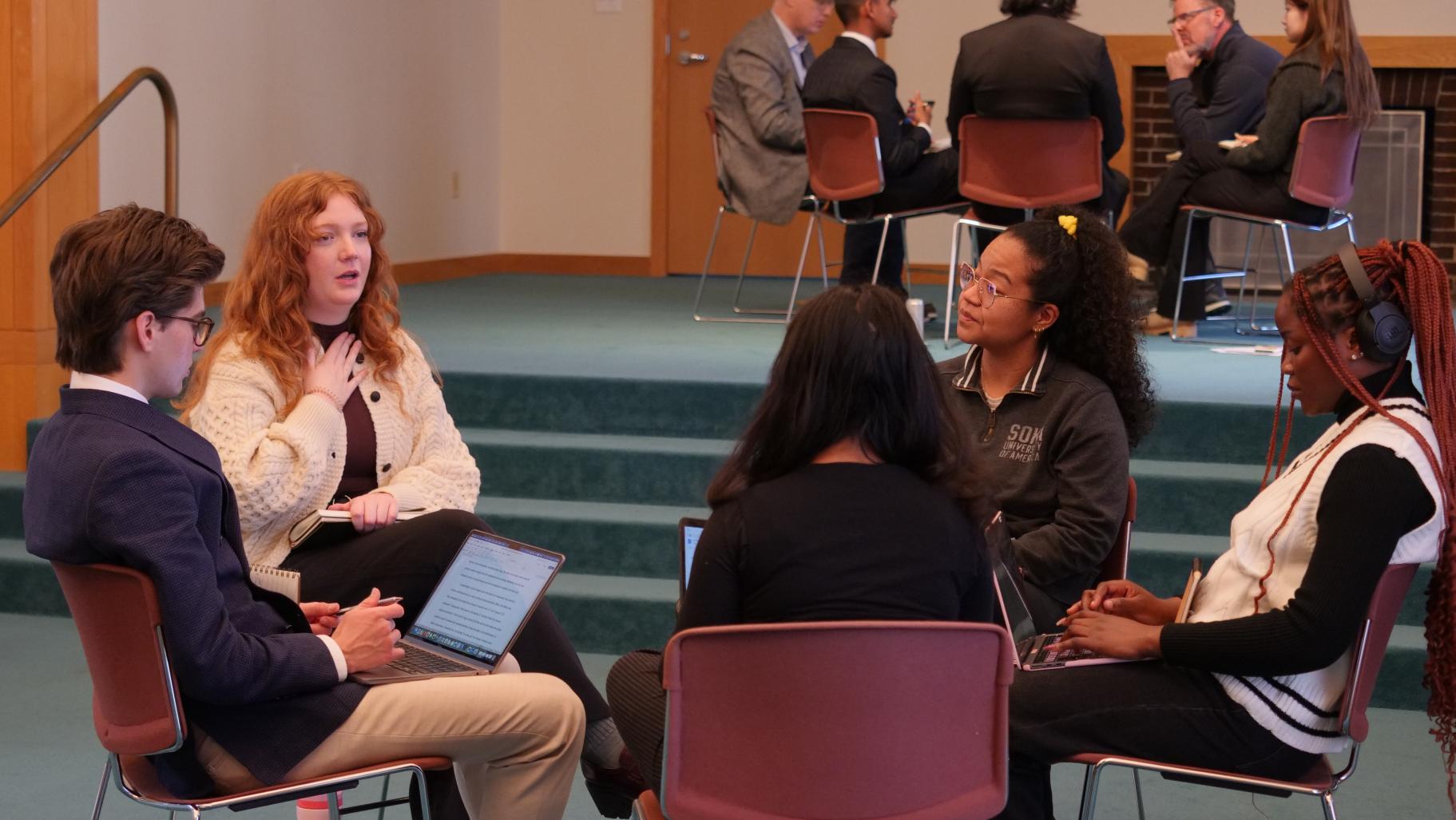
Following the panel discussion, the SUA students had the opportunity to meet with the panelists in smaller groups to share and receive feedback about their research papers. At the conclusion of the seminar, the panelists offered their reflections. “I’m really so impressed…to see so many young people who have an interest in this issue and a desire to work on it in their careers,” said Hodgkin. He then acknowledged that the students may be entering a “tough job market” in this field but if it’s something they truly care about, with “creativity” they can define a path forward. On a similar note, Linakis encouraged the students that despite these realities, “it doesn’t mean you can’t do it [nuclear disarmament] in whatever capacity you [pursue] service in the world.” Christ spoke next expressing his gratitude for the seminar and students. “This has been such a rewarding experience for me,” said Christ. “We hope that we have given you something that’s useful, but you’ve given us so much in return. Hope, enthusiasm, hope with action…. Thanks for letting us grow.” Finally, McGinty also appreciated the time and effort of the students, recognizing that there are many other things they could be doing with their winter break. She hoped to continue the dialogues saying, “I’m excited to stay in touch and if it’s possible, I would love to read all of your papers.”
Notes
* Under the main provisions of the NPT, enacted in 1970, the nuclear armed states could keep their arsenals but agreed to not build new weapons and to actively take steps toward full disarmament. All other signatories had the right to nuclear energy but could not develop nuclear weapons of their own. All signatories must allow inspections from the International Atomic Energy Agency (IAEA) to ensure compliance.
** Back from the Brink’s core focus is to convince the United States “to lead a global effort to prevent nuclear war.” To that end, they urge the U.S. to enact five policy solutions, which are outlined in their congressional resolutions — H. Res. 317 in the U.S. House and S. Res. 323 in the U.S. Senate:
- Pursue global elimination of nuclear weapons through a verifiable agreement among nuclear-armed states to eliminate their nuclear arsenals
- Renounce the option of using nuclear weapons first
- End the sole, unchecked authority of any president to launch a nuclear attack
- Take U.S. nuclear weapons off hair-trigger alert
- Cancel the plan to replace the entire U.S. arsenal with enhanced weapons