Dialogue Nights #38: Wisdom, Interconnection, and Nuclear Disarmament
The recent Dialogue Nights asked participants to engage in dialogue connecting two topics of vital concern to the Ikeda Center. The first was Daisaku Ikeda’s conviction that developing the wisdom to perceive and honor our interconnectedness is a core attribute of being a global citizen. The second commemorated the August 6 and 9, 1945, bombings of Hiroshima and Nagasaki, respectively, by considering various aspects of the imperative of nuclear disarmament.
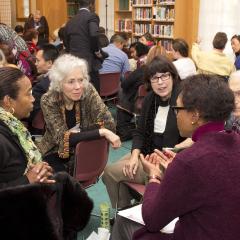
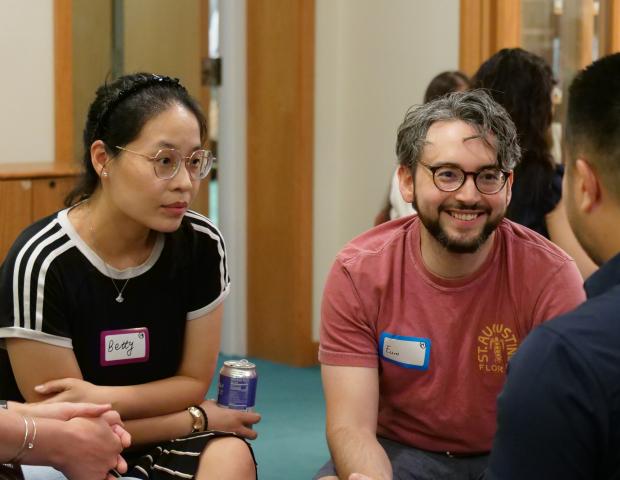
This program perfectly exemplified the essential purpose of Dialogue Nights, described by event moderator Preandra Noel as “providing a co-created third space intended to provide a safe and brave space for young people to engage in meaningful dialogue on topics that are of pressing concern.” In attendance for this evening of hope-filled dialogue were 68 Boston-area university students and young professionals. As always, the evening began with a look at the Center’s four dialogue commitments and nine ground rules. The former consist of such imperatives as “strive to bring out the best in oneself and others” and “listen to and learn from each other.” The latter recommend actions such as “being mindful of the time we take to speak and give others space to do the same” and “acknowledging and celebrating the effort that we all took to show up.”
Introducing the dialogue’s focus, Preandra said that it was chosen “because we believe that the threat of nuclear weapons is indivisible from other threats to our world and that it’s important to amplify the voices of hibakusha, atomic bomb survivors, who have been courageously sharing their stories for decades to protect our future.” Given the complexity of nuclear issues, Preandra and Ikeda Center summer program intern Becca Faber prefaced the dialogue activities with slide presentations that contextualized the state of nuclear weapons and nuclear disarmament efforts.
The slides communicated a number of important points worth pondering. One touched on the massive amount of money – nearly 70 billion dollars – that the US spends on nuclear weapons each year, thus potentially diverting it from pro-social expenditures. Then there is the fact that today’s weapons are both more plentiful and exponentially more powerful than those deployed in WWII. Further, the systems that control them are extremely risky. The presentations also shared the experiences of the hibakusha, whose testimony attests to the severe effects of these weapons and whose pleas for disarmament are grounded in concern for humanity.
One of their most important lessons, said Preandra and Becca, is to awaken us to our interconnection. In a slide they shared these words of Daisaku Ikeda,
We need to awaken to a common consciousness of being all inhabitants of Earth. This consciousness … lies in our hearts, in our ability to share the pain of our fellow human beings. It is the spirit that says: “As long as you are suffering, whoever you are and whatever your suffering may be, I suffer also.”
In the concluding slides, Becca shared some of the many dimensions or aspects of interconnection. There are economic dimensions as exemplified by the global supply chain; there are ecological dimensions revealed in “the web of life”; there are social aspects that are pervasive within cultures; and there are political dimensions that can reverberate around the globe. Finally, as the hibakusha so well communicate, there is interconnection between the past and present. Considering this in terms of health, the hibakusha still suffer health effects from all those decades ago. And the threat to all of us is not something relegated to history, but ever-present.
After the slide presentations, participants engaged in a “rotational small group activity” called a gallery walk. Moving from station to station in groups of four, they viewed and discussed a series of panel boards depicting images such as the immediate devastation of the bombings, as well as hibakusha stories and their advocacy efforts.
Following the gallery walk, and before the evening’s breakout group dialogues, Becca gave a slide presentation on the current state of nuclear weapons, the quest for nuclear disarmament, and why this issue matters today. Key points included: the conclusion of informed analysts that the risk of nuclear war is higher now than at any time since the ending of the Cold War; the ways that AI, a “non-human actor,” has collapsed potential “deliberation time” when nuclear use is threatened and the danger of AI treating nuclear weapons as “strategic tools as opposed to moral dilemmas”; the success of the Treaty on the Prohibition of Nuclear Weapons; and the “unfathomable losses” that would result from nuclear weapons deployment.
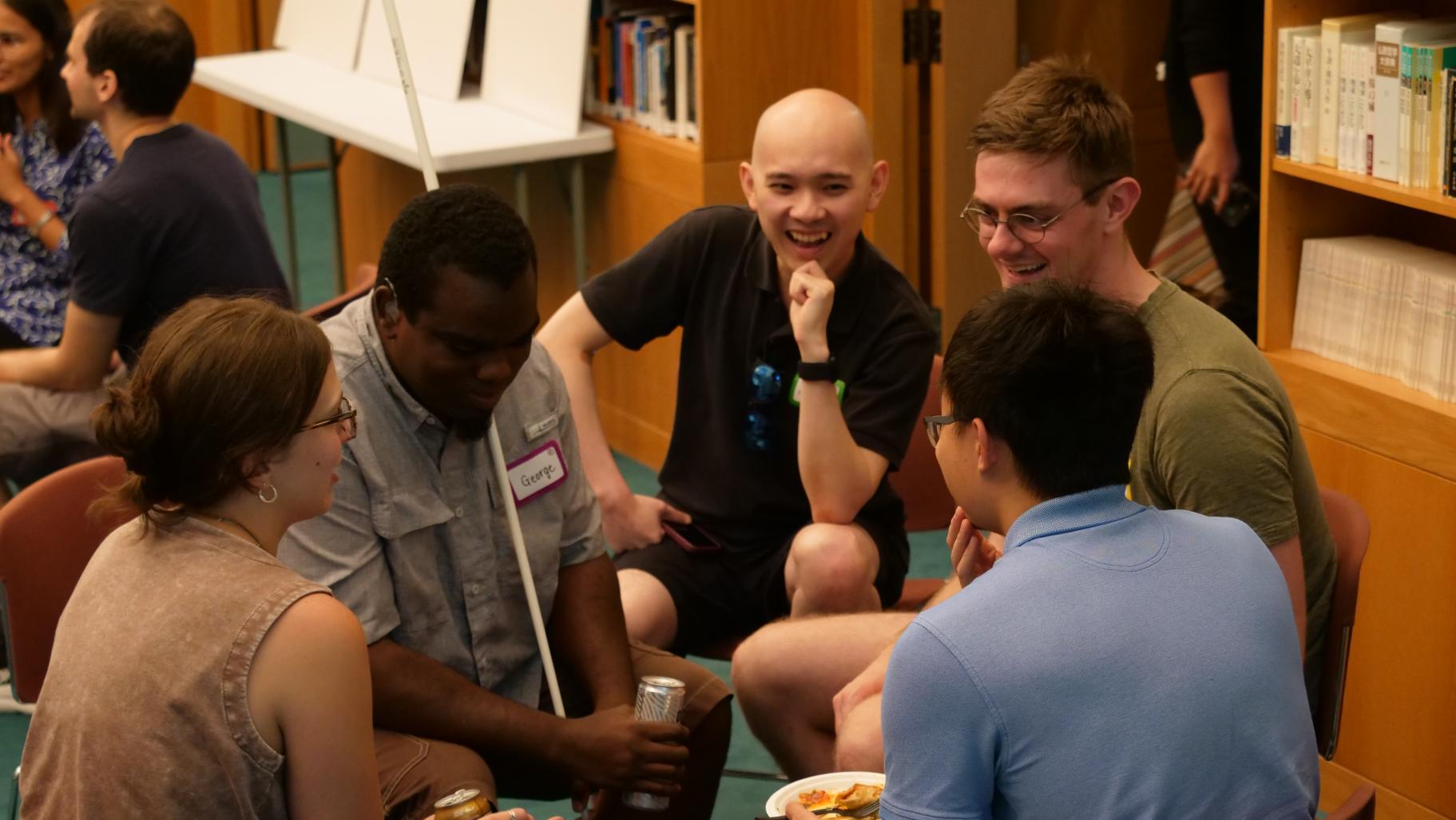
For the main dialogue activity of the evening participants gathered into small groups to reflect on the presentations and gallery walk by discussing three guiding questions.
- What does interconnectedness mean to you, and how has your understanding of wisdom changed?
- If everyone engaged with the world through the lens of our interconnectedness, how might our world be different?
- Based on what you heard today, was anything that you learned new to you? What has your engagement with these ideas looked like tonight?
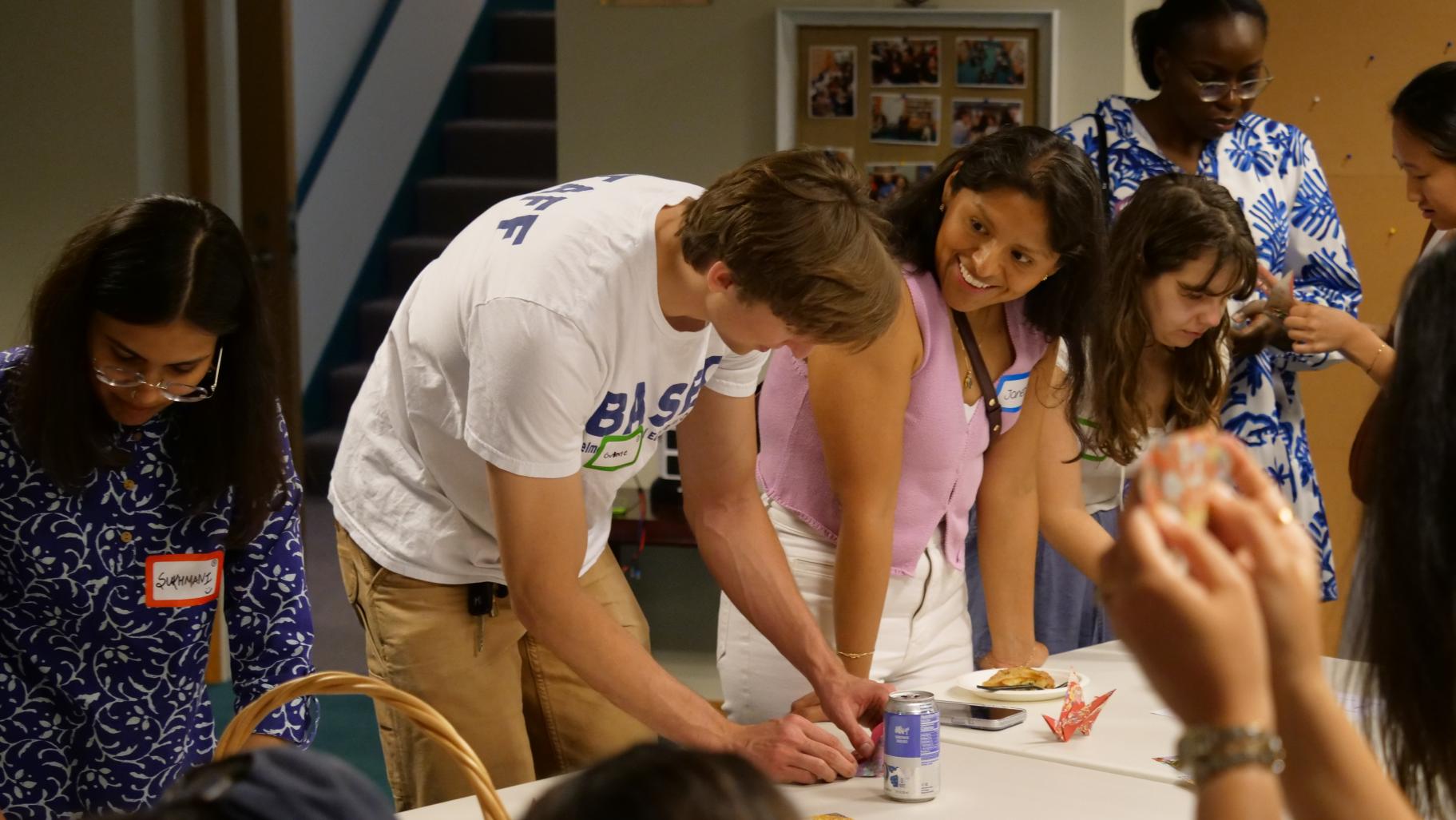
After the breakout session, attendees were invited to actively process their thoughts and emotions by creating artwork, writing poems or perhaps a letter to someone they had lost, or by making paper cranes that the Center would be sending to the Children’s Peace Monument in Hiroshima.
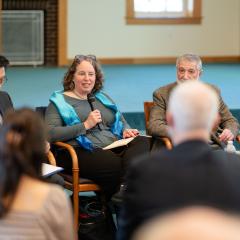
Finally, Preandra moderated a brief shareback session during which participants shared insights and takeaways on interconnectedness and the challenging reality of the nuclear threat. The participants who shared communicated the inclusive nature of this special Dialogue Nights. One observed that “we are all interconnected by virtue of the fact that the Earth is a single system. So if something happens to a living or non-living object, it’s going to have an effect on the rest of the planet,” adding that getting more people to realize this is vital. Another said that they really liked this “kind of raising of historical events” and as a result they feel the need to become better informed. They also noted that there are forces conspiring against our awareness of interconnection, and that these sources should be named. The third to share spoke of this “beautiful concept” that you are “a human being through other people.” And “I definitely felt more human today because of the lovely conversations we were having,” they added. Finally, a participant said how important it is to know “you are not the only one going through something.” And knowing this is a way of “reminding yourself” how much all of “our lives are so much [more] interconnected” than we think they are.