June '26 Dialogue Nights Lite: “Connecting With Our Inner Child”
As a “direct extension” of the popular and long-running Dialogue Nights series, explained the Center’s Preandra Noel, Dialogue Nights Lite was launched to both offer more opportunities for dialogue and to focus on the sharpening of dialogue skills themselves. This provides an alternative to the Dialogue Nights mission of “creating a brave and safe place” for young adults in their 20s and 30s to engage in structured dialogue around topics of urgency and concern for their cohort. Dialogue Nights Lite is also unique in that each event is co-moderated by members of the Ikeda Center Youth Steering Committee.
Before turning over the stage to the co-moderators, Preandra shared the Ikeda Center dialogue commitments and ground rules with attendees. The four commitments include actions such as “avoid pre-judging and categorizing people” and “listen to and learn from each other.” The nine ground rules drill down to specific actions such as “We will be mindful of the time we take to speak and give others the space to do the same” and “We will not devalue or ‘put down’ anyone’s experiences or lack of experiences.”
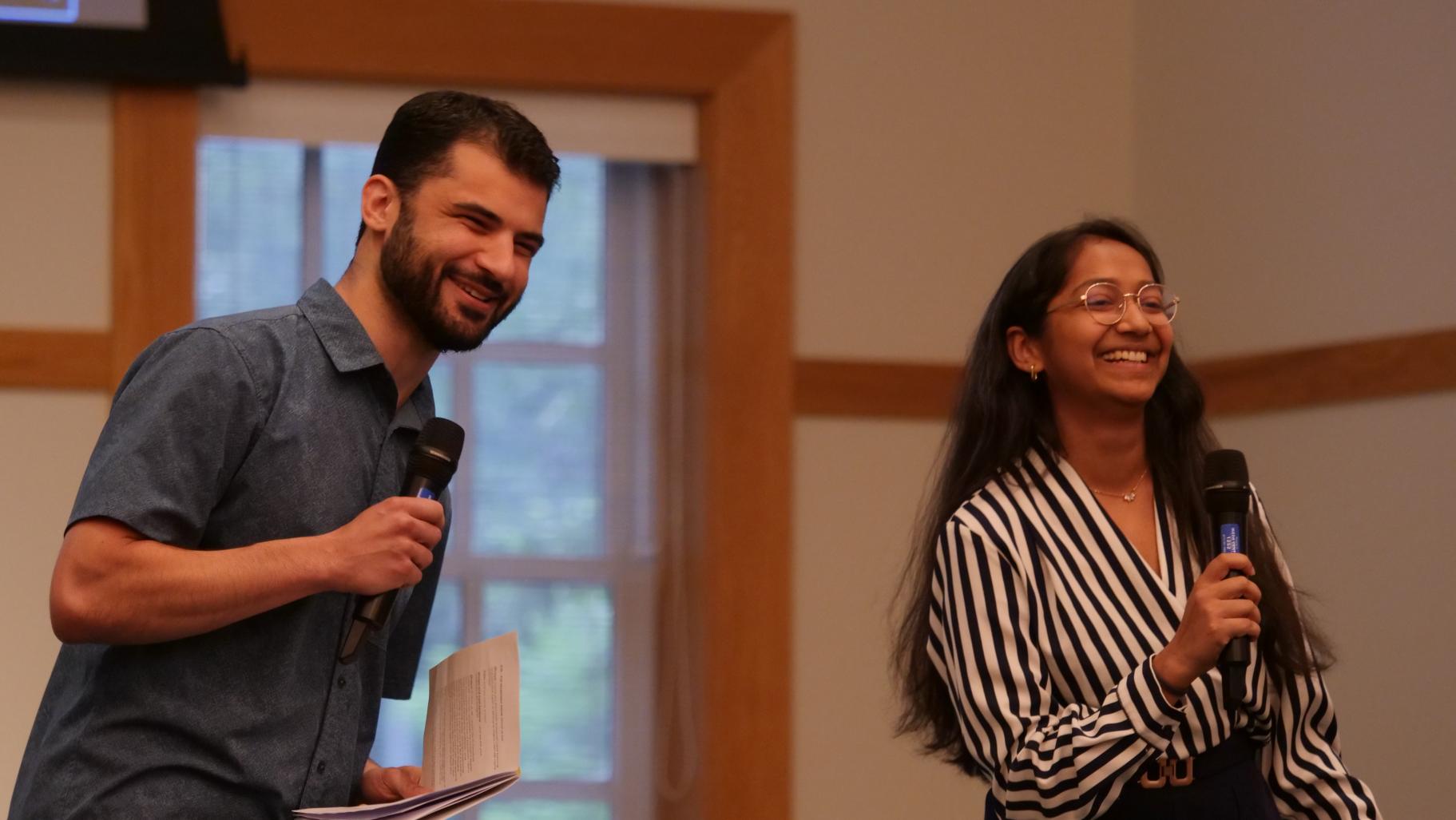
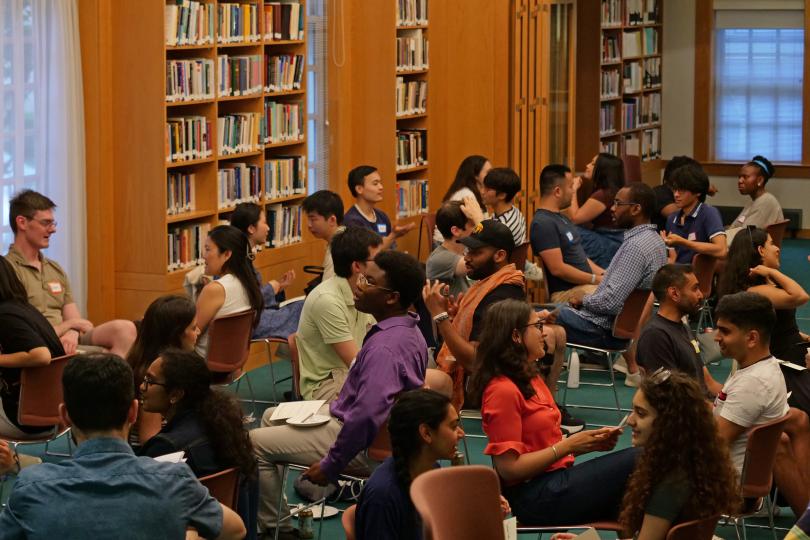
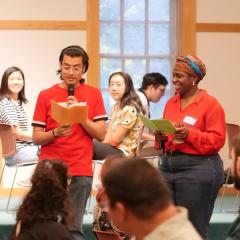
For the June 26 event, the co-moderators were Cam Morose, a school psychologist at an elementary school in Boston, and Shreya Goel, a math educator and artist. During opening remarks, Shreya shared some thoughts on Daisaku Ikeda’s approach to dialogue, which would guide the evening, saying that
he always first made sure to get to know his dialogue partners by asking questions about their lives. And that is exactly what we will be doing today! The foundation of dialogue for him stems from having faith in human beings or, in other words, believing in another person’s inherent goodness. And extending another person the opportunity to get to know you is the practice of having that faith.
Then, Cam introduced the theme they chose for the evening, “Connecting With Our Inner Child.” As Cam and Shreya prepared for the night, said Cam, “we thought it would be interesting to learn more about what we were like as kids. After all, that is usually when we are our most authentic selves.”
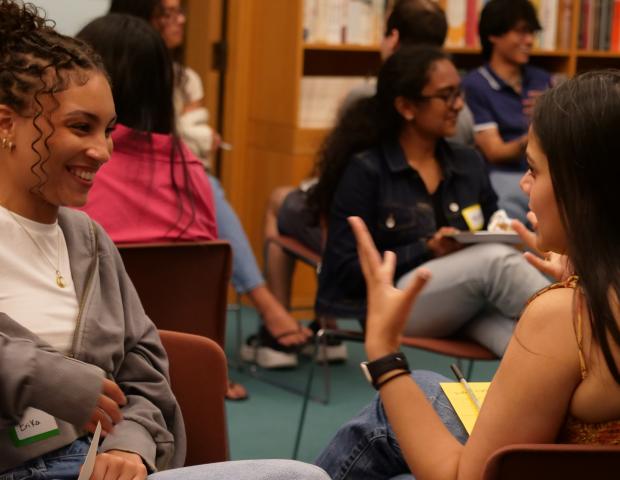
To explore this theme, participants engaged in four rounds of “speed connecting,” which is what the Ikeda Center calls the dialogue process where pairs take turns answering a single “get-to-know-you” question in short, 10-minute conversations. For this DNL, participants connected by sharing memories of various, universal childhood experiences. The first two questions were:
- What were your favorite things to play as a child? (e.g. tag, hide and seek, sports, Legos, music, etc.)
- What is a funny or embarrassing story from your childhood?
Pausing after question two, Cam asked everyone to take a moment to reflect back on the dialogue commitments that were introduced earlier and to choose one to practice during the final two questions. These were:
- What were some of your dreams as a child?
- As a child, who did you look up to the most? What was it about them that you appreciated?
After the last speed connecting session, participants shared some of their thoughts about the experience, responding to prompts like: “what was the most fascinating thing that you’ve heard tonight? And: What was the most surprising thing that you shared with your dialogue partner? After a few minutes of “open mic”-style sharing, Shreya thanked everyone and offered this quote from Daisaku Ikeda: “The seeds sowed through dialogue will, over time, grow and blossom.” And signing off, she said that “tonight you planted a seed not just in another person, but also within yourself!”
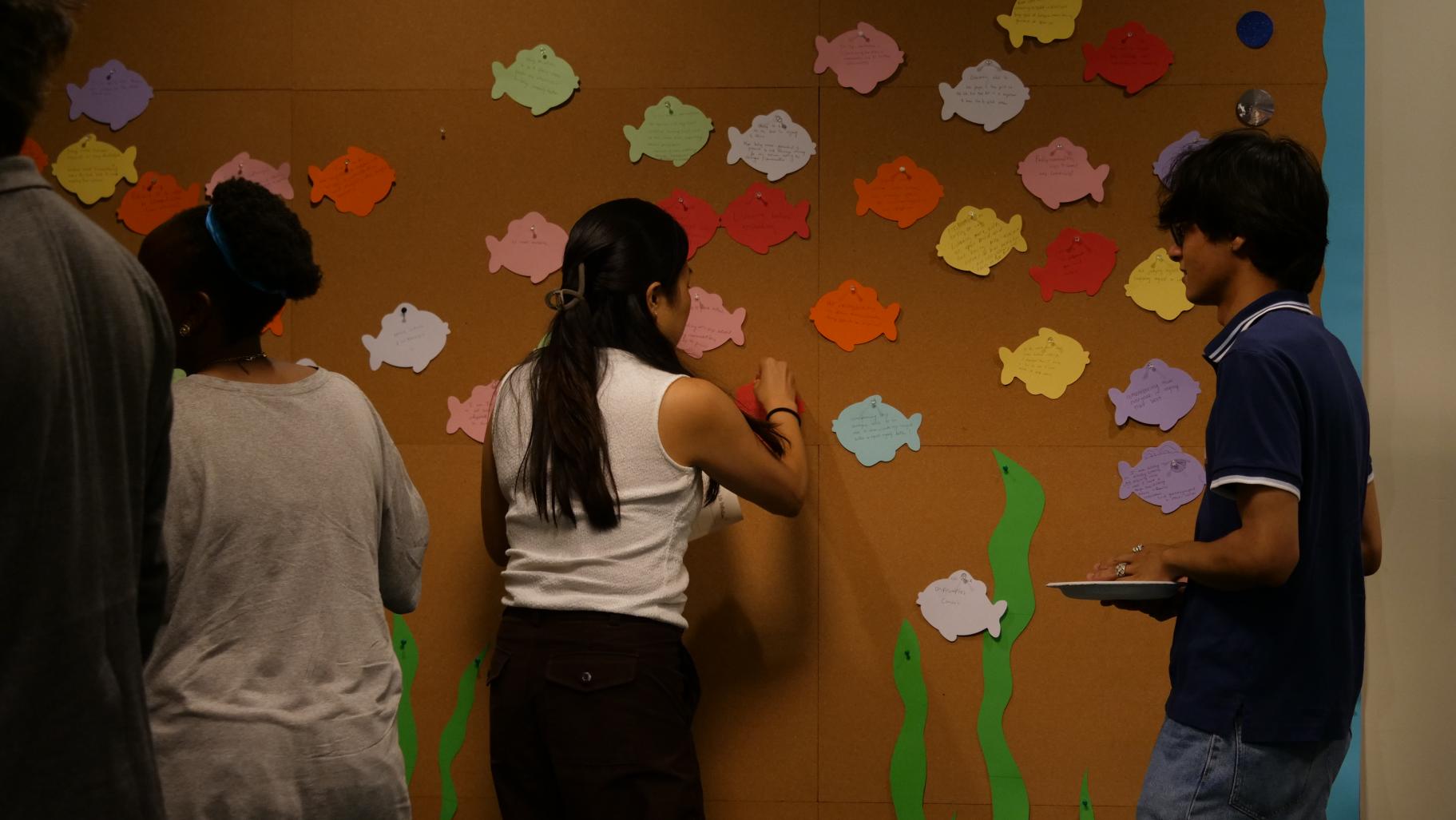
With the evening winding down, Preandra expressed her hope that “connecting with your inner child” increased everyone’s “self-awareness” and enhanced their “self-compassion.” Then, transitioning to the last activity, she asked: “Do you ever feel like a fish out of water, or like uncomfortable, awkward, out of place in social situations?” If so, Daisaku Ikeda offers us a way to “see value in those moments. “It is in the ocean of dialogue,” he said, “that a person can become truly human. Dialogue is an epic challenge which first requires you to change yourself, rather than trying to change others.” With these thoughts and the evening’s activities in mind, Preandra asked the last question of the evening: What is a dialogue skill you are strengthening / working on to feel more connected to the world around you? After taking a few minutes to write down their thoughts, participants then posted their replies to the Center’s Dialogue Wall. Here are just a few examples of their thoughtful commitments:
- Being more curious and present in every dialogue. Cherish each encounter as if that’s the last time I am meeting this person
- Listening before responding
- Being able to be your authentic self! Not feeling anxious about having conversations. Enjoy the process.
- To be comfortable in silence during the flow of conversation and let the pace come naturally.
- Striving to bring out the best in myself and others. Also being more grounded and present and not always aiming for an outcome out of the dialogue/conversation.