A Look at Some of Our Core Convictions
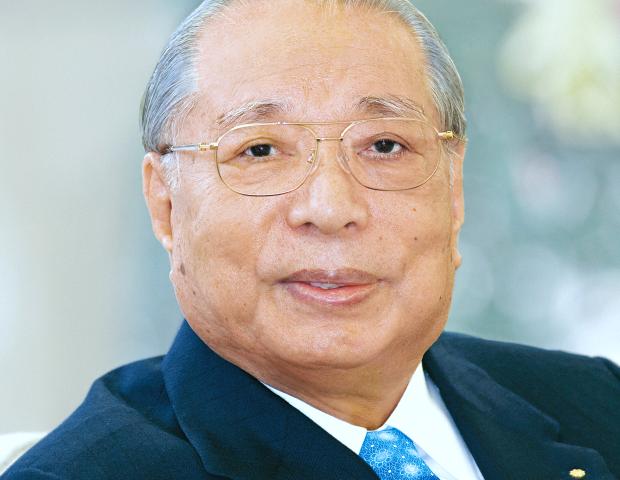
Daisaku Ikeda, 1928 - 2023
Up until his death in 2023, Center founder Daisaku Ikeda would send messages of encouragement and guidance to the Center to mark special occasions and anniversaries. Several years ago, Mitch Bogen went through these messages to see if there were key ideas and convictions that appeared prominently throughout. Here, he offers a personal perspective on some of his findings.
1. Dialogue and Mutual Understanding are Inseparable, and Needed Now More Than Ever
Dialogue is among the most powerful tools for nonviolent personal and social change. More than a technique, dialogue represents a stance or orientation, evidence of “a humble willingness to learn from others.” Further, it represents a commitment to shared understanding at a time in history when large numbers of people—the powerful and the powerless alike—see the process of globalization as so inevitably fraught with violence and misunderstanding that the only reasonable option is to fight and win, be it in the physical world or in the world of ideas. In the aftermath of 9-11, when many looked to armed conflict for solutions, Daisaku Ikeda came to a different conclusion: “It is my firm conviction that efforts to create new systems to prevent and counter global terrorism will be genuinely effective only when the kind of dialogue that addresses and transforms the human spirit is conducted on a global scale.”
Read commentary on Conviction One from scholar-friends of the Center
2. Humanistic Education Is Vital To Human Progress
There is wide agreement on the centrality of education to any efforts at personal and social progress in the decades to come. The difference of opinion is about the nature of the teaching and learning that is needed. The Ikeda Center advocates Soka, or value creating, education, a pedagogical approach developed by Japanese educator Tsunesaburo Makiguchi in the early decades of the 20th century. Soka education resonates strongly with humanistic American pedagogies in the Deweyan tradition, especially in its focus on helping learners discover and develop their unique interests and capacities. In so doing, individuals can maximize the value of their contributions to our world. Further, the emphasis is not on the acquisition of knowledge for knowledge’s sake, but rather on the development of wisdom, which orients knowledge for the well being of all.
Read commentary on Conviction Two from scholar-friends of the Center
3. It’s Critical To Maintain Faith In People’s Potential for Good
Faced with so much cruel and thoughtless human behavior, it is tempting to succumb to cynicism and despair about the ability of individuals to make a positive difference in our world. From this position, one is left with only the option of top down, coercive solutions—i.e., the kinds that rarely, if ever, stick. As a response to widespread despair, faith in human potential for good should not be confused with unthinking optimism; rather, this faith maintains, based on the evidence of actual positive behavior, that humans have the inherent capacity, individually and collectively, to overcome self-imposed limitations and impact the world in creative as opposed to destructive ways. Our faith in the power of dialogue, in humanistic education, and in democracy itself depends on faith in people’s potential for good.
Read commentary on Conviction Three from scholar-friends of the Center
4. Respect for Human Dignity and Reverence for the Sanctity of Life Provide a Baseline Ethical Standard
This fundamental standard has far-reaching implications. How much damaging behavior depends on a denial of the inviolable integrity of persons and our planet? To name just two examples, widespread reports of torture and stark evidence of environmental catastrophes indicate that human dignity and the sanctity of life do not figure as strongly in our calculations as they must if we are to advance toward creative, sustainable cultures of peace. To respect this standard would require a major recalibration of our systems of interaction with each other and our world. For example, we might acknowledge the limitations of market-based economies in providing for the well being of all people and our planet. We might also question the use of military actions as a strategy for social change. The Ikeda Center supports behaviors that respect and nurture the “Buddha nature,” or inherent positive potential, of all people.
Read commentary on Conviction Four from scholar-friends of the Center
5. The Reform of Self Is Essential to the Reform of Society
This concept resides at the heart of the philosophy of value creation that guides the Center’s work. First of all, this philosophy maintains that it is mistaken to wait for difficult external forces to improve before we ouselves take positive steps for the betterment of self and society. Admittedly, there are circumstances where an individual’s options are limited, sometimes severely so, but the principle of always looking to create value is a powerful ideal. It also provides a strong point of resonance with the ethical core of the American Renaissance, a philosophical tradition that the Center often looks to for meaningful connections with Buddhist humanism. Says scholar Ronald A. Bosco: “The most valuable lesson that Thoreau delivers to us today is that all cultural transformation begins with the individual, begins from within.” Daisaku Ikeda concurs that “efforts to improve systems or surroundings will be meaningless unless there is an inner change within people themselves.”
Read commentary on Conviction Five from scholar-friends of the Center
6. The Poetic Power of the Imagination Calls Forth Our Highest Potential
A key aspect of Daisaku Ikeda’s philosophy is his insistence that there is an aesthetic dimension to ethical behavior. This conviction, which has roots in the worldview espoused by the 19th-century Romantic poets and philosophers and which also resonates with Deweyan thought, runs headlong into the contemporary instinct to seek mechanistic solutions to problems of every kind: Education is best measured by test data; every illness has a chemical solution; environmental problems require an engineering of nature as opposed to a change of behavior. For Ikeda, the problems facing our world, including those relating to what has been called “the clash of civilizations,” depend for solutions on “the poetic power of the imagination, that which compels the poet to create portals of hope and discover entranceways for exchange in the massive walls that divide our world.” Poetic endeavors, by their very nature, not only express reverence for life and its mysteries but also help us to realize our potential as creative, compassionate, and discerning beings.
Read commentary on Conviction Six from scholar-friends of the Center
7. Awareness of Interdependence Forms the Crux of the 21st Century Worldview
Pressed to name the one concept that, if widely internalized, would have the greatest positive impact on our world, a strong case can be made for the interdependence of all life, also characterized as interconnection. This concept directly challenges today’s prevailing assumption that life is essentially a competitive affair, defined by “the survival of the fittest,” both biologically and socially. Scientifically, we can observe the marvelous complexity of mutually supporting life forms that develops within ecosystems over time. The healthiest ecosystems are those manifesting the greatest biodiversity; even the smallest insect can play an absolutely vital role in assuring the health of a system. The spiritual or metaphysical corollary of this truth in Buddhism is found in the doctrine of dependent origination, which holds that “no beings or phenomena exist on their own; they exist or occur because of their relationship with other beings and phenomena.” Internalizing this truth, we will be less inclined to believe we can succeed at the expense of other people or the planet that sustains us.
Read commentary on Conviction Seven from scholar-friends of the center