Dialogue Nights #37: Compassion – the Practice of Restoring Connection
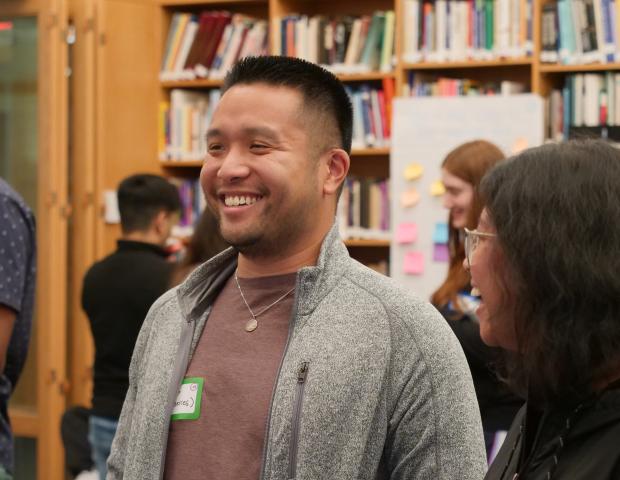
Welcoming the more than 50 Boston-area university students and young professionals to the May 2026 Dialogue Nights, host and moderator Preandra Noel said that “this is a co-created third space that is brave and safe because of our community, all of you, who are enthusiastic about connecting heart-to-heart and seeking opportunities for dialogue!” She then explained that the evening’s theme was drawn from Center founder Daisaku Ikeda’s lecture delivered at Teacher’s College, Columbia University, in 1996. In that lecture, he identified wisdom, courage, and compassion as the core characteristics of the global citizen. With that framework in mind, said Preandra, tonight’s theme would be compassion, with the next two Dialogue Nights exploring wisdom and courage.
As is Dialogue Nights tradition, the activities started by revisiting the Ikeda Center’s four Dialogue Commitments and nine Ground Rules for Genuine Dialogue. That was followed by an icebreaker activity inspired by the nighttime picture of Earth that was taken the previous month by an Artemis ll crew member. First, participants discussed the feelings the image inspired in them. Then Preandra introduced Carl Sagan’s conclusion based on his first viewing of an image of the earth from space, which is that “it underscores our responsibility to deal more kindly with one another, and to preserve and cherish the pale blue dot, the only home we’ve ever known.”
For the first main activity, participants engaged in a “gallery walk” to reflect on four prompts placed around the room:
- What does compassion mean to you?
- Who or what is easy to have compassion for?
- What compassionate act have you given or received recently?
- What makes extending compassion challenging for you?
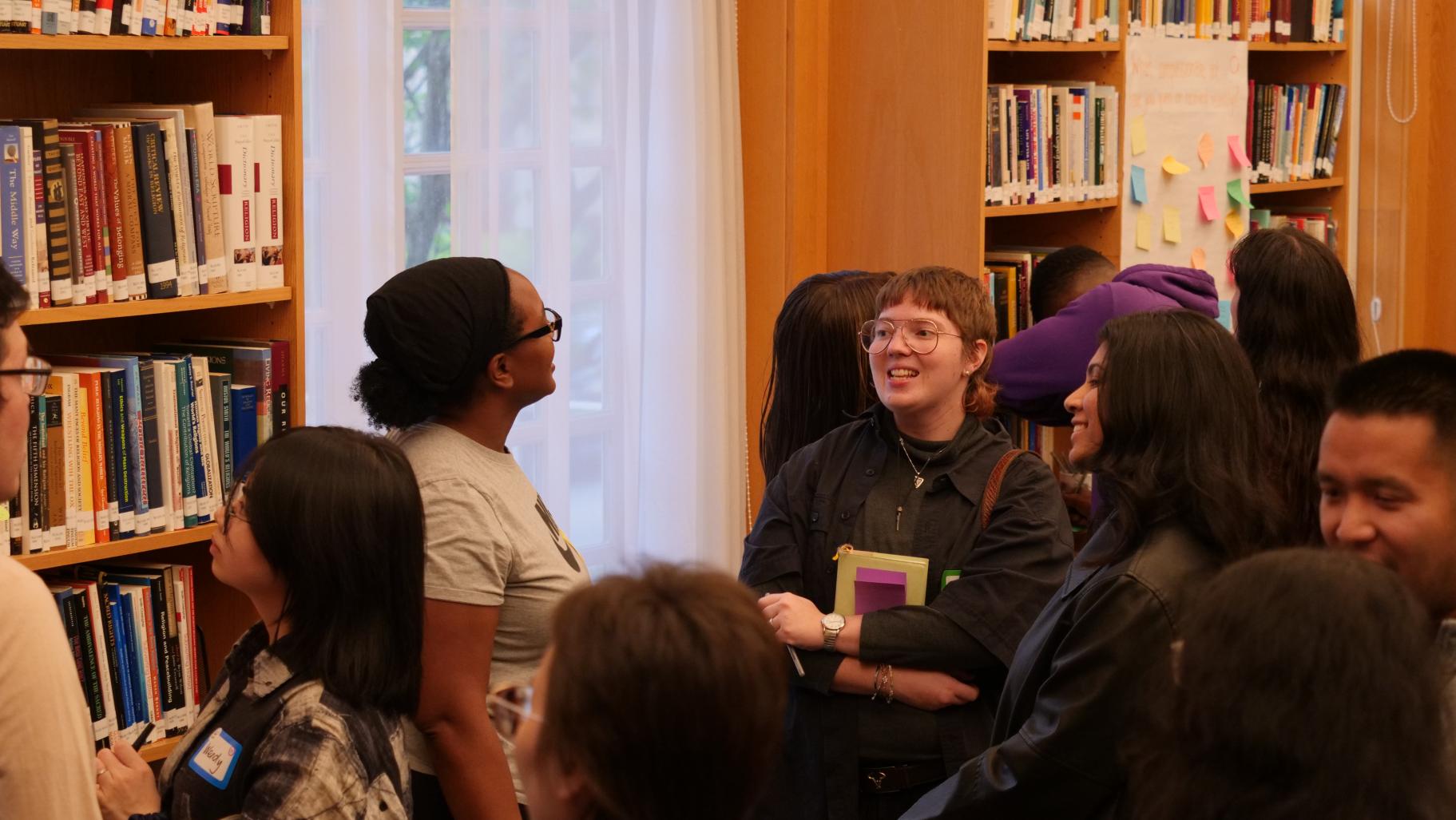
The responses, which were left as post it notes at each station, revealed a rich array of reactions and impressions. The meanings of compassion included perspectives such as this one, which summed up many of the responses: “listening, giving space, and not judging,” said one participant. Another put it quite succinctly, saying compassion means “giving a damn.” In terms of who it is easy to have compassion for, many mentioned children, friends, family, and those with whom we are “in close proximity.” One person stated the goal here, saying, “ideally everyone!” For recent acts of compassion participants may have “given or received” recently the responses were varied but mostly in the realm of what might be called everyday kindness: having a friend listen to my worries and offer encouragement; forgiving a family member and giving them grace; having a manager at work encourage me to take time off when needed and then helping me take that day off. In terms of challenges, two participants spoke for many when they mentioned feeling “burnt out and overwhelmed by how much compassion is needed in the world” and the difficulty of compassion when the other person “leads with anger.”
Before moving to a small group activity centering on Daisaku Ikeda’s thoughts on Buddhist compassion, everyone viewed some quick videos and slides that provided some baseline definitions of compassion and empathy. Among these was a video featuring the thoughts of Brené Brown, who in Preandra’s words “reminds us that empathy is best tapped into when we are brave enough to recognize our own fragilities because it speaks to how getting to know ourselves more deeply is integral to how we better connect with other people.”
Next, the main small group discussion of the evening asked participants to engage with Mr. Ikeda’s conviction that:
Compassion in Buddhism does not involve the forcible suppression of our natural emotions, our likes and dislikes. Rather, it is to realize that even those we dislike have qualities that can contribute to our lives and can afford us opportunity to grow in our own humanity. Further, it is the compassionate desire to find ways of contributing to the well-being of others that gives rise to limitless wisdom. Buddhism teaches that both good and evil are potentialities that exist in all people. Compassion consists in the sustained and courageous effort to seek out the good in any person, whoever they may be, however they may behave. It means striving, through sustained engagement, to cultivate the positive qualities in oneself and in others.
For their small group dialogues, participants focused on these two prompts: 1) Share your reflections on the Ikeda quote (referenced above). What do you think about this perspective?, and 2) Share a recent experience of compassionate action as described by Mr. Ikeda.
Following that discussion, participants arranged in a large circle and were given index cards and pens with the invitation to write down their responses to this question: What is one of the most difficult moments you’ve experienced in your life? Preandra also asked everyone to not include their names, so that each response would be anonymous. When done writing, each person folded their card and placed it in a basket at the center of the circle. Once all the responses were collected, Preandra asked for a few to be read aloud, passing the basket around to one reader and another. Each one exemplified the vulnerability essential to compassion. One heartbreaking response was “My mom telling me not to marry my now wife because she’s from a different country and ethnicity.” Another mentioned the blow of “losing documentation.” Then there was the shock of learning that “one of my favorite people got stage four cancer at age thirty-nine.” Adding to that, was their inability to abate their friend’s trauma. Others mentioned struggles with mental health, rejection in job searches, and the loss of family and friends. Finally, Preandra read one more aloud that spoke to the contingency of life: “Realizing that the people I love can die. Realizing that the people closest to me have their own way of seeing things, and that many of us possibly [might] stop talking one day if we don’t put in effort to understand and love each other every day.” Before moving on from this activity, Preandra thanked everyone for being vulnerable together, adding that she hoped they would use this experience “as a reminder to continuously think about how we can be someone who can be with vulnerability when it is shared with us, allow vulnerability to guide us back to our hearts and inspire kindness, and be open-minded to the various lived experiences around us.”
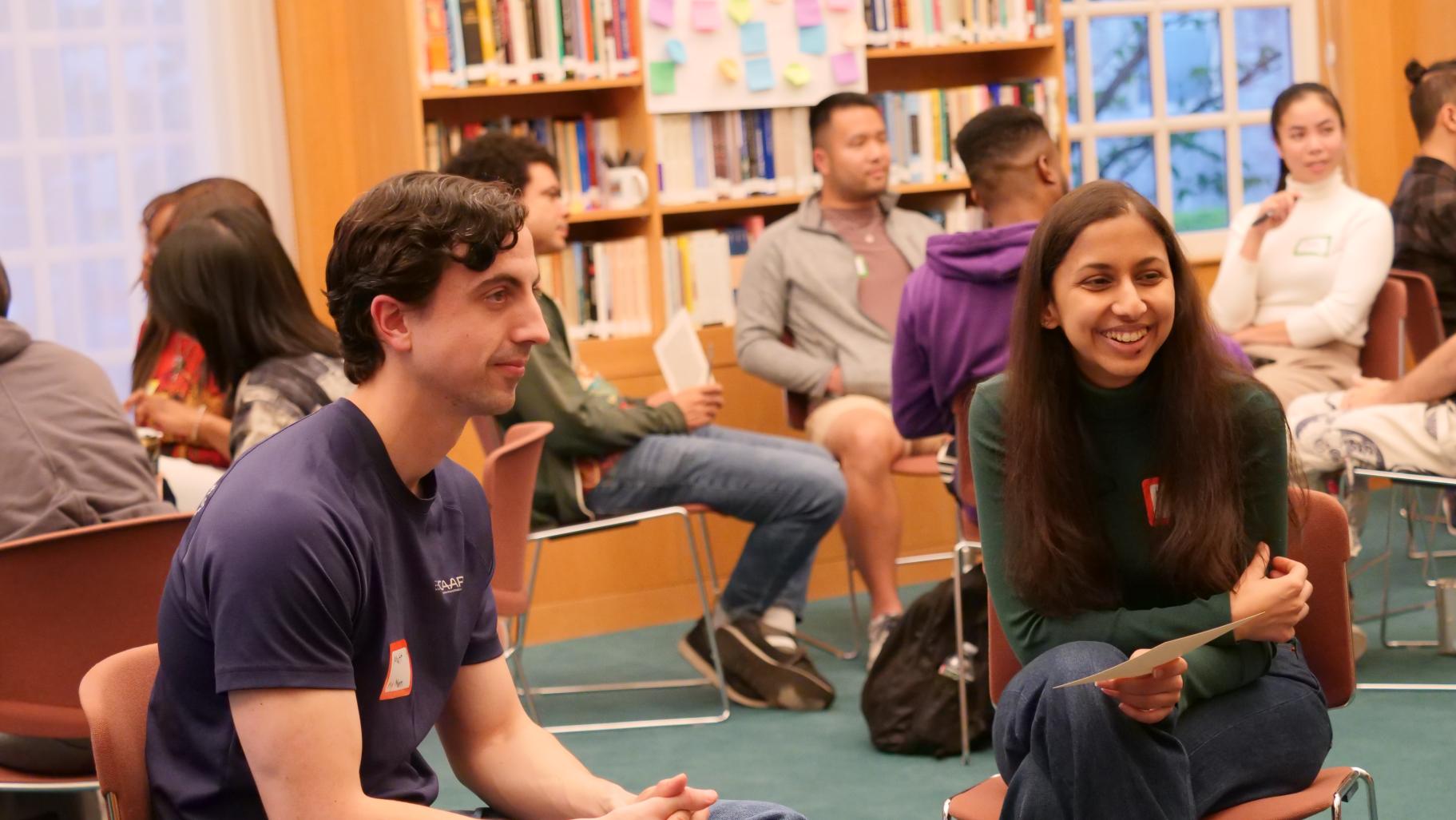
Before the evening-ending Open Mic session, participants engaged in one more reflective activity. For this, they responded to the prompt: If you knew a little bit more about what the people around you were carrying, how might you engage with them differently? After writing down their thoughts, participants posted them to the Center’s Dialogue Wall. One simple response encapsulated the main takeaways of the evening: “If we knew more about what people are carrying emotionally, we would treat each other with more kindness, patience, and empathy.” And, as several others noted, the way to do this is to proceed with “curiosity” and by “listening.”
Finally, as many Dialogue Nights do, things drew to a close with some of the attendees offering personal reflections on their experience. During this Open Mic session, many expressions of gratitude and appreciation were shared. Here, as one example, is a comment that reveals how compassion requires each of us to take the initiative. In this, the speaker recalls how, during small group discussion, one group member
shared a really moving story about compassion with his housemates and how, even though it might seem pointless to always be responding with love and compassion, especially if you feel like it’s not being given back, it really does chip at something that’s hard that somebody might be holding onto, and it might seem like a brick wall, but it really is making a dent… . It’s also a reminder for myself to smile at people even if I’m not getting the smiles back. It’s definitely doing something. It’s softening their hearts the more we do it.