Report From the 2026 Educating for Peace Conference
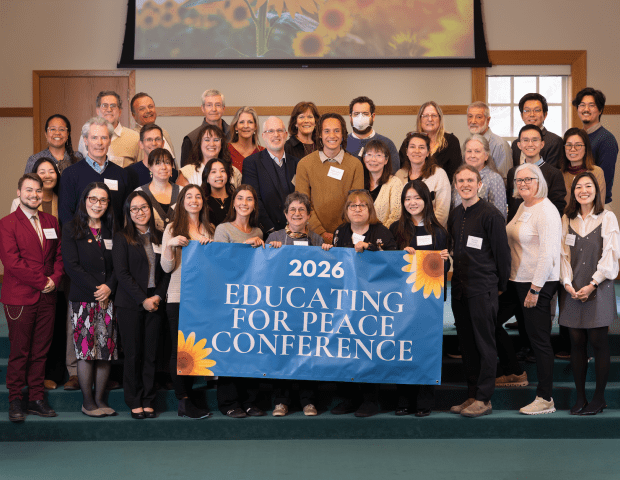
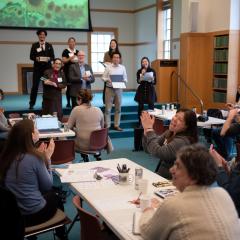
The second annual Educating for Peace Conference was held from April 25–26, 2026, at the Ikeda Center for Peace, Learning, and Dialogue. Co-organized with the Soka Institute for Global Solutions at Soka University of America (SIGS), the James Martin Center for Nonproliferation Studies (CNS) at the Middlebury Institute, and EdEthics at the Harvard Graduate School of Education, the conference brought together middle and high school teachers from across the United States to explore effective ways to teach students about the threats and historical legacies of nuclear weapons, reflect on what it means to educate for peace at this time, and build a network of teachers committed to nuclear disarmament through youth education.
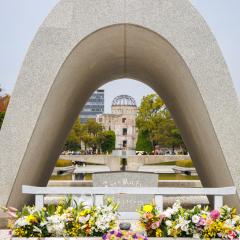
Mrs. Keiko Ogura, a Hiroshima hibakusha, sent a written message to the conference, which was read by Yumiko Kasai, a student from Soka University of America, during the opening session. In Mrs. Ogura’s message, she spoke about her experience growing up in wartime Japan and witnessing the horrors of the atomic bombing of Hiroshima. She emphasized the importance of disarmament education as our ability to “imagine the pain of others.” In conclusion, she shared that though she is no longer young, she has not lost hope. “Because education is hope itself,” wrote Mrs. Ogura. What this means, she added, is that “a single word you speak in your classroom might build the ‘defenses of peace’ in the heart of one single child.”
Day One
Day 1, Session 1: Introduction to Nuclear Weapons and Disarmament
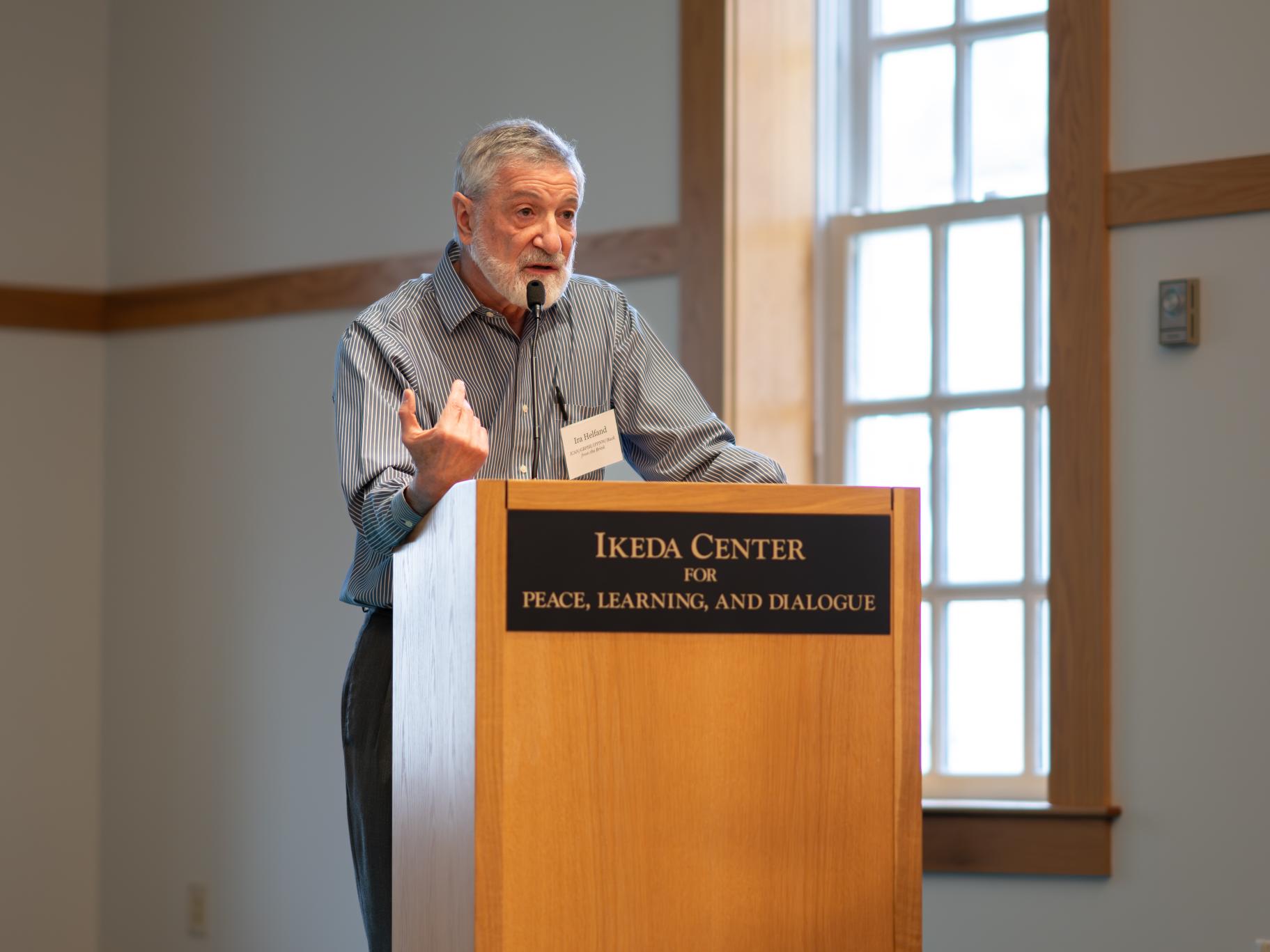
Following the powerful message by Mrs. Ogura, Dr. Ira Helfand, and Brennan Tierney led Session 1 on Introduction to Nuclear Weapons and Disarmament. Mr. Tierney, who is a teacher and also member of the conference organizing committee, invited the teachers to take on the role of a student and participate in a lesson plan using an existing educational resource. In this particular exercise, students are assigned a country that supports either the retention or disarmament of nuclear weapons. After learning about their assigned country’s stance, each group had to present their argument. This allowed the teachers to experience how students might learn and think about the issue of nuclear weapons. After this activity, Dr. Helfand presented on the current state of nuclear weapons and the humanitarian consequences of nuclear war. He also spoke about the importance and impact of grassroots efforts by civil society and young people in particular, and that now is the time to create a people’s movement for disarmament. After Dr. Helfand’s presentation, teachers reflected on and discussed their takeaways from the session.
First among the points made during shareback was that “listening to people with different opinions is something that our students need to learn, and is evident that a lot of adults have not learned in society.” In classrooms, specifically, it’s important that students are working with accurate presentations of competing positions while also have the flexibility to “bring their energy and personality” to discussions. On the question of how doable it is for teachers to implement disarmament curriculum, one teacher argued that teachers actually do have latitude to implement and integrate lessons of this sort into their overall curriculum. The challenge is doing this kind of teaching and learning in states where there “are more repressive environments” in terms of this sort of subject matter. Most often the objection is that teachers are unduly frightening or traumatizing students. But, said one teacher, parents should know that “It is okay for your child to be uncomfortable in school. Do not associate fear with being uncomfortable. They’re two different things.” On this topic, Dr. Helfand interjected that, to date, even in conservative states where certain topics are discouraged, “this issue hasn’t been proscribed any place. It may be soon, but at the moment, I think there’s still almost everywhere the ability to talk about this issue, and we should take advantage of the window while it’s still there.”
Day 1, Session 2: Concurrent Sessions
In the afternoon, attendees had the opportunity to sign up for different sessions where they could learn how to integrate various resources in their classrooms and schools. Session presenters included:
- GBH PBS LearningMedia Resources “Teaching the Nuclear Age: Past and Present” by Sue Wilkins and Mary Ellen (Mel) Mahoney Bissell, GBH Educational Foundation
- Critical Issues Forum (CIF) Presentation: Global Disarmament and Nonproliferation Education for High School Students by Masako Toki, Senior Project Manager and Research Associate at the James Martin Center for Nonproliferation Studies at the Middlebury Institute
- Current Affairs by the Soka Institute for Global Solutions (Tetsushi Ogata, Visiting Assistant Professor of Peace and Conflict Studies and Managing Director of the Soka Institute for Global Solutions at Soka University of America, Alexander Harang, Distinguished Adjunct Professor and Senior Research Fellow at the Soka Institute for Global Solutions, at Soka University of America, and Kentaro Shintaku, Columbia University)
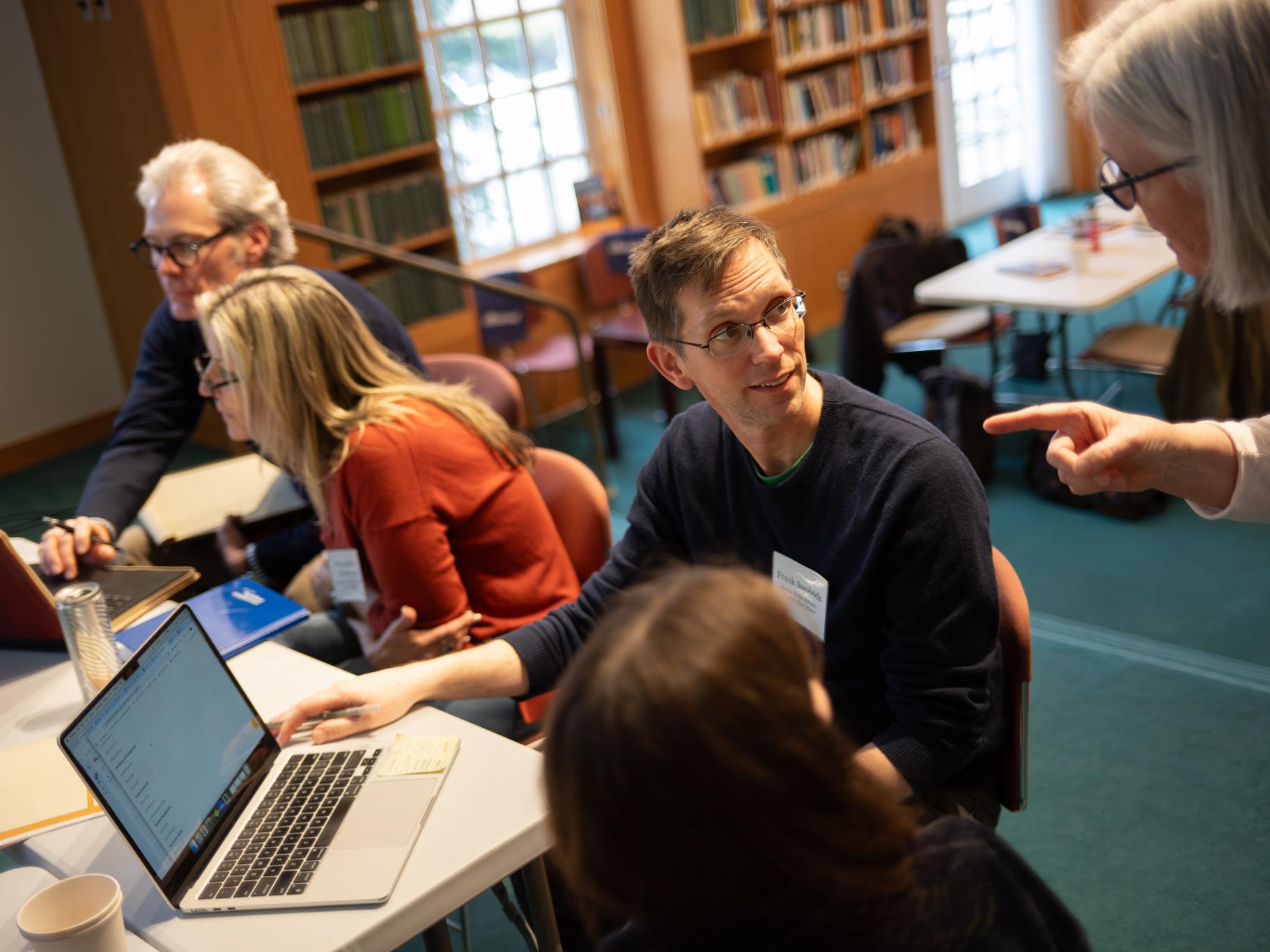
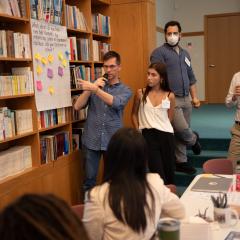
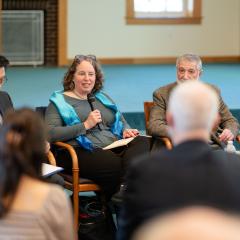
During a brief shareback, participants highlighted some of the takeaways from the three concurrent workshop sessions. One participant shared that it would have been “amazing” to engage in these kinds of lessons in high school, where the subject was limited to the decision to drop nuclear bombs on Japan at the end of WWII. In terms of specific lesson planning, he said that his group explored “having a simulation to discuss nuclear weapons in real time.” The premise is that a nuclear weapon has already been launched so students have only 30 minutes to determine their response. This takes the question out of the realm of the “theoretical.” Another participant raised the practical and political question of how do we “match” the actions and positions of “the decision-makers and political leaders we have” with our “voices” and the “goals we have for safety and peace.” They posed this as an ongoing, “complicated and interesting endeavor.”
Day 1, Session 3: Youth Perspectives by Students for Nuclear Disarmament
The last session of Day 1 featured a presentation by two representatives of Students for Nuclear Disarmament (SND), Maria Udalova and Eddie Laiché. The two youth spoke about the work of SND as well as how they got involved in the field. They shared their current struggles to continue the work as young people but also their determination to keep growing their network of students dedicated to nuclear disarmament. After their presentations, the teachers had the opportunity to think about how they would support students in their school to either join SND or take action on this issue. Several teachers connected with the SND reps hoping to start chapters at their schools.
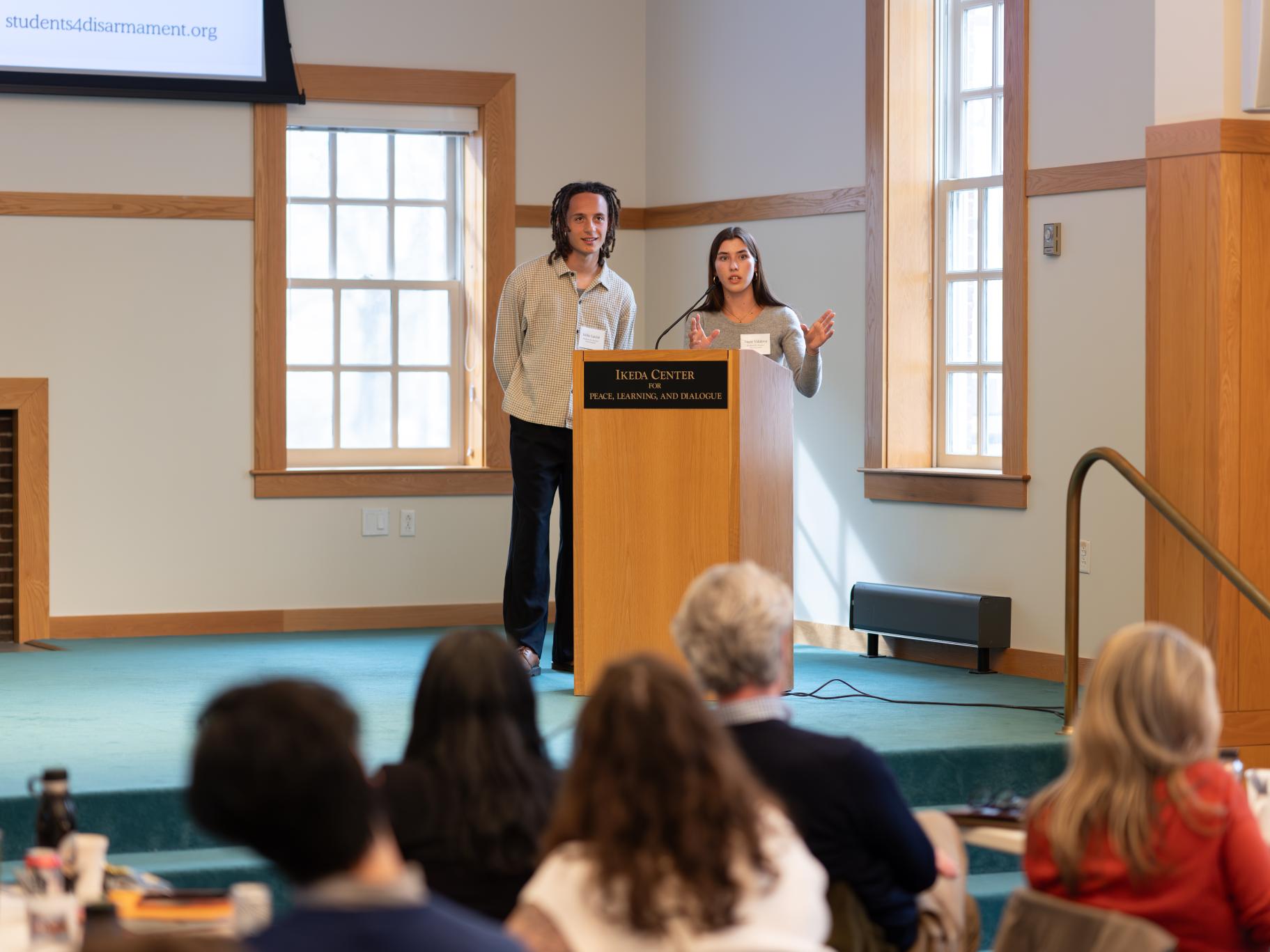
The presentations by Eddie and Maria of SND inspired a range of interesting ideas from participants. The first to speak shared how, as a member of both the SND group at SUA and a as pre-med student there, she did a presentation on “the story of Sadako [Sasaki] and how she folded one thousand paper cranes while she was hospitalized.”* Then, connecting to medicine, she shared how surgeons have improved their “manual dexterity” by folding cranes. Another participant shared a unique call “to go beyond action” to understand “that growing is also thinking, is also being silent, is also wondering, is also writing poetry, is also listening to music.” We need to “replenish the hearts and minds” of people who want something other than “hatred and nuclear weapons.” In essence, “there is an important change that is your change and not just the change that you provoke in others outside.” Adding a school-based finding from his many years’ experience in this field, Dr. Helfand emphasized the most successful SND chapters always benefited from “having a strong faculty advisor, particularly at the high school level.” This is because the advisor can sustain the momentum of the club even when each year’s student leaders graduate. Maria confirmed that this was indeed her experience as an SND student leader at her high school, and thanked Dr. Helfand for bringing up this “important” point. For his concluding point, Eddie said that SND along with Kentaro and Dr. Ogata would be developing a survey that participating teachers could give to their students, “asking questions like: What is your experience with this issue? What do you know about it? And: How do you feel about it?” For her conclusion, Maria reiterated that there are many benefits to students when they “participate in advocacy projects,” not least the enhancement of their self-confidence.
Day Two
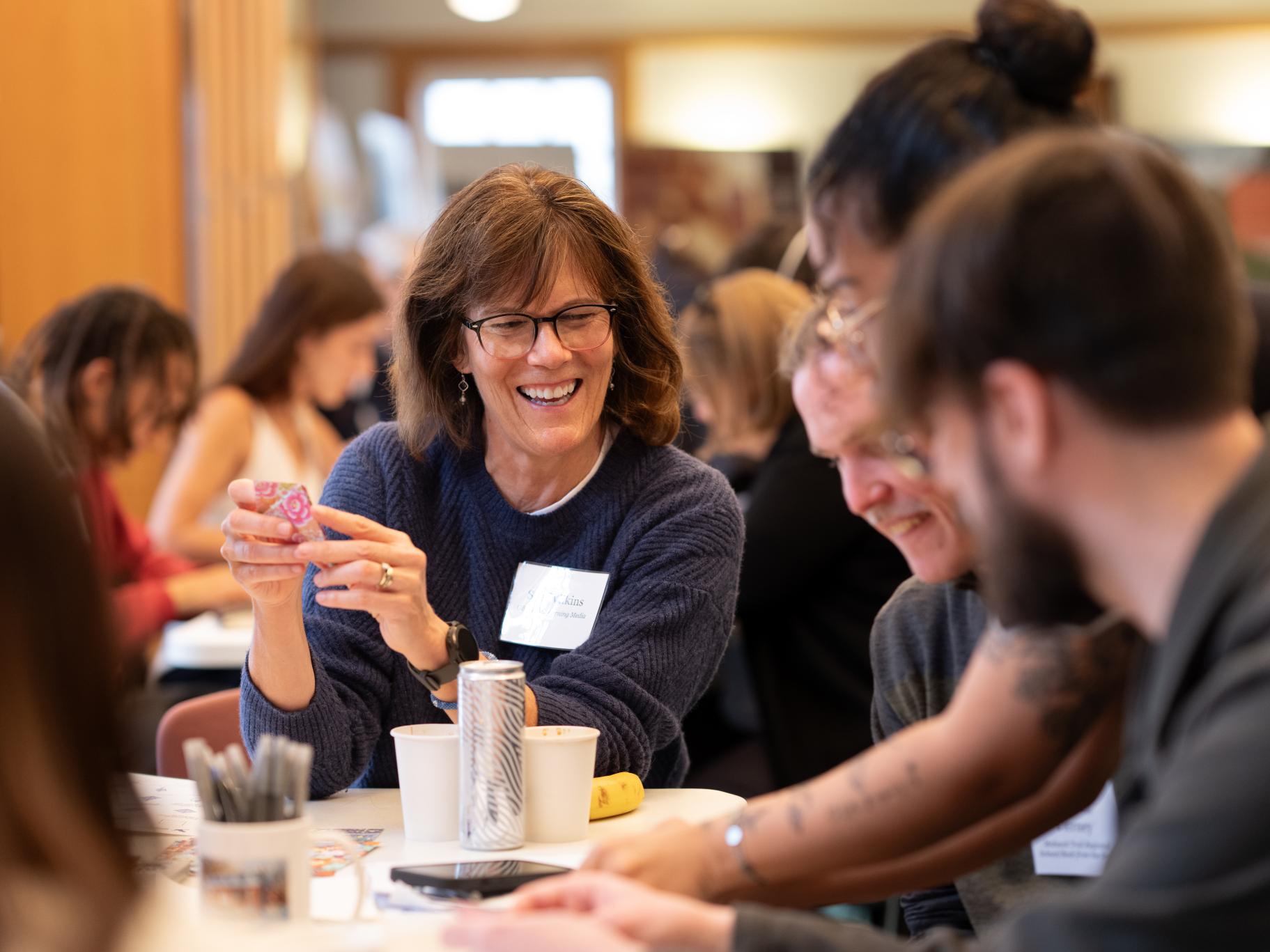
Day 2 of the conference began with some time for grounding and reflection. Dr. Ogata spoke about a key conference objective, which is to create a network of teachers dedicated to this cause towards 2030. He also invited the teachers and participants to envision a world free of nuclear weapons by 2030 and stressed that each person at the conference would all be a part of making that vision a reality. After Dr. Ogata’s remarks, the Center’s Program and Office Coordinator Preandra Noel led the teachers in a paper crane-making activity. Ms. Noel first shared about Sadako Sasaki’s story and the meaning behind the thousand paper cranes. Then all the teachers made their own paper cranes, which the conference organizers plan to send to Hiroshima. Several teachers expressed interest in bringing the same activity to their students.
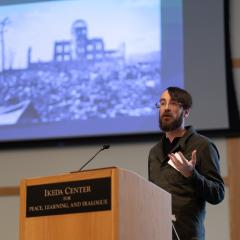
Then, after the paper crane-making activity, Dr. Stephen Herzog of CNS and Harvard Kennedy School’s Project on Managing the Atom delivered a keynote lecture on nuclear weapons, politics, and the theory of nuclear deterrence. In his presentation, he examined how nuclear weapons are taught and debated, highlighting the divide between deterrence and disarmament. He urged the educators in the room to engage students critically rather than dismiss opposing views. Ultimately, he advocated for more nuanced education, open dialogue, and serious consideration of disarmament as a way to reduce existential global risk. (Read a detailed write-up of his lecture here.)
Day 2, Workshop 1: Peace Education
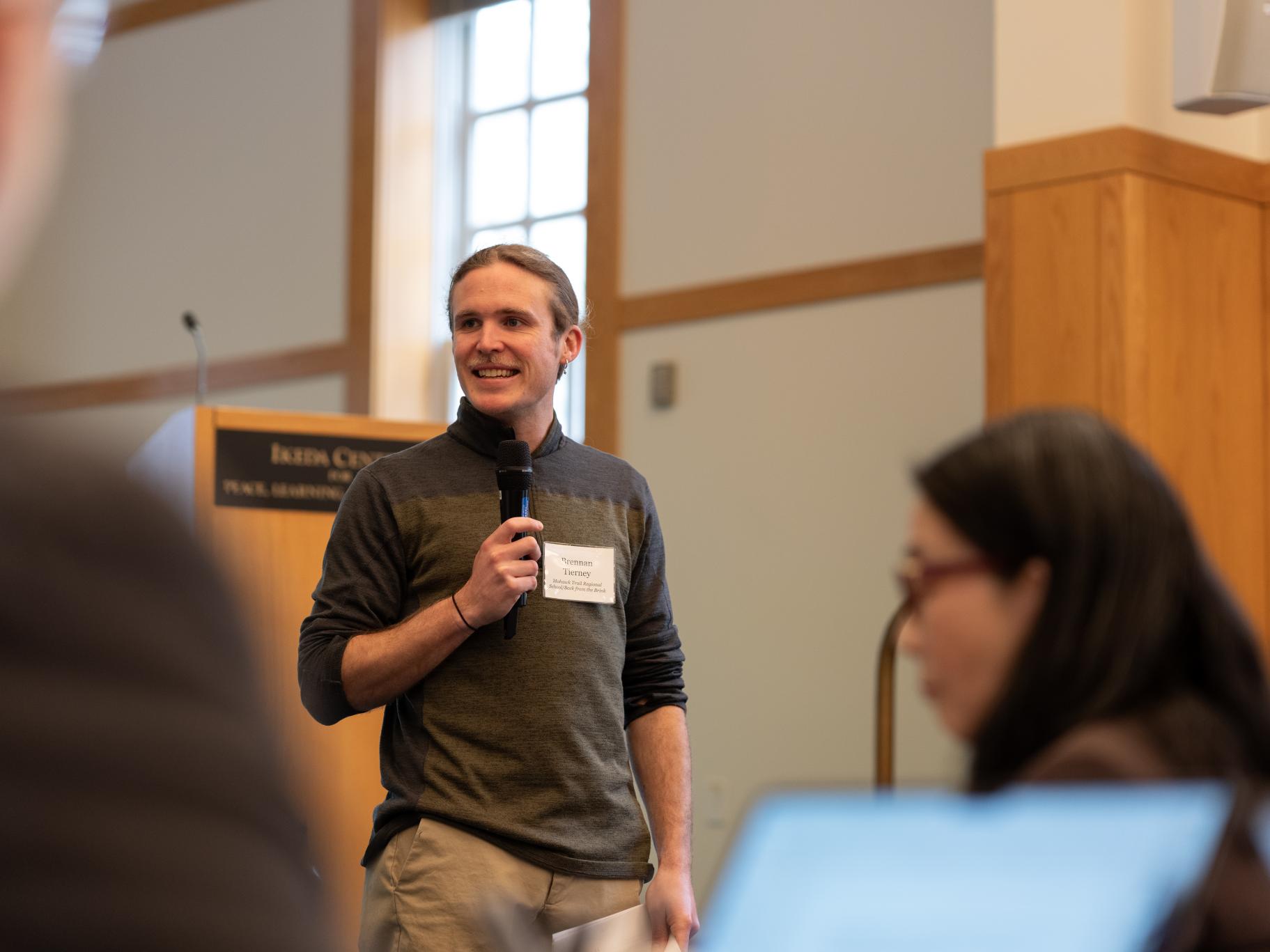
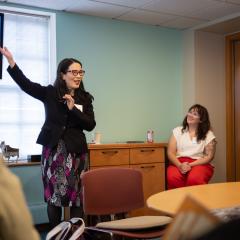
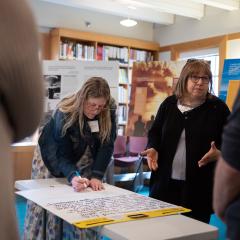
Following Dr. Herzog’s session, teachers engaged in workshops for the rest of the day, facilitated by Mr. Tierney. Workshop 1 included a presentation by Dr. Ogata on Ikeda’s perspectives on global citizenship followed by a gallery walk inviting teachers to reflect on peace education. To open the shareback for this section, Mr. Tierney invited comments on the prompts at each of the five stations for reflection. What does it mean, he asked, to educate for peace right now? He also invited everyone to see peace education as part of a long legacy. Speaking first, Kentaro mentioned the “gap between the ideal and the reality,” urging peace educators to emphasize the actions they can take. He also hoped that everyone could help raise awareness about peace education as a field. Another participant reiterated earlier concerns about getting pushback from parents and others that the topic is too political. Underscoring the centrality of this issue, another emphasized the importance in helping students understand the difference between safety and feeling safe versus “being uncomfortable.” Relatedly, the teacher can help students consider “what it means to be courageous and take risks.” And once these topics are introduced, they said, have students take the lead in exploring the meanings and implications of these ideas. Turning to the lesson planning component, participants emphasized the importance of students’ direct participation in the teaching and learning. “Students need to be the ones building the compromises, digging into the treaties, organizing the group, and collaborating actively,” said one. Another spoke up for the value of nuclear crisis simulations, with “each student taking on a [given] country’s perspective.” Finally, a participant suggested employing Augusto Boal’s “forum theater” to engage with nuclear issues.
Participants also had the opportunity to hear from two teachers from the 2025 Educating for Peace Conference who returned this year and shared what action they’ve been able to take since last year. Both teachers have been successful in bringing nuclear disarmament education to their schools in various ways. Using their examples for inspiration, participants then delved into lesson and unit design. They were each provided a “Vision-to-Action” template to use as a guide to brainstorm concrete ways to implement what they learned into their own classroom settings.
Day 2, Workshop 2: Growing and Sustaining the Network
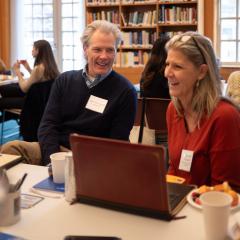
The second workshop centered on how to grow and sustain a network of nuclear disarmament educators. Mr. Tierney led the group in some paired and group reflection with questions such as “What do you feel is the responsibility of teachers to educate for peace and to ensure students can learn about important topics such as disarmament education, with an ethical and moral lens?” This was then followed by a “world café” where participants broke out into small groups to discuss how to stay connected as a group and how to expand this group of educators committed to peace education. One person mentioned that if “you have something others can see and latch onto it broadens curiosity.” Identifying yourself explicitly as a peace educator is one way to do that. Creating visible peace education communities is another. Connecting with the groups already doing this work is also key, said another. “You don’t need to reinvent the wheel,” concurred another. Returning to a key theme for the conference, one participant spoke of the importance of faculty advisors who “support and really advise and come up with ideas or initiatives.” Here, Dr. Herzog mentioned the example of 2017’s Treaty on the Prohibition of Nuclear Weapons. When activists wanted to promote it, there weren’t the kinds of disarmament groups to reach out to like there were in the 80s. That is why connecting disarmament to other fields like the environment or issues like AI makes sense.
Conference Conclusion
At the end of the conference, participants reflected on and wrote their commitments to this work. One teacher shared that he is committed to bringing five teachers to next year’s conference. Another committed to starting a chapter at her school for teachers who are interested. A member from the City of Cambridge Peace Commission also shared her commitment to revive the city’s nuclear disarmament mission.
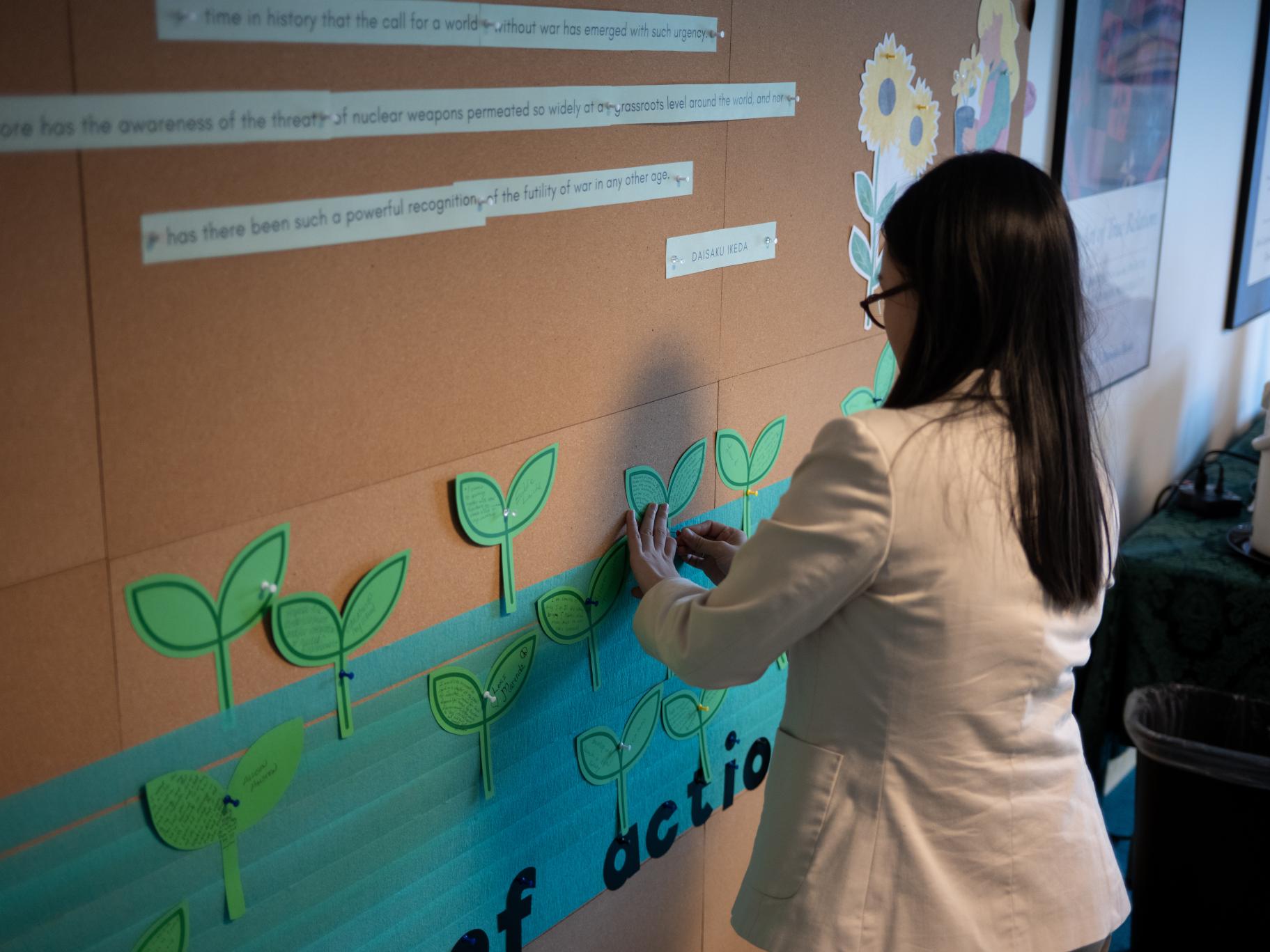
In their concluding remarks, conference organizers Kevin Maher (Ikeda Center), Tetsushi Ogata (SIGS), and Masako Toki (CNS) expressed their appreciation for all the speakers and teachers. Dr. Ogata called on everyone to “envision” together a future without nuclear weapons. Mr. Maher invited the teachers to bring their colleagues to next year’s conference and continue growing this network. While acknowledging the lack of disarmament education in this current moment, Ms. Toki shared that these two days working with high school teachers, students, and like-minded people gave her hope.
* Sadako Sasaki was two years old and living two kilometers from the Hiroshima atomic bombing when it occurred. Although she appeared unharmed, she developed leukemia—known as the “A-bomb disease”—when she was in seventh grade. After being hospitalized, her friend Chizuko told her the legend that folding 1,000 paper cranes could bring recovery to a sick person. Inspired by this story, Sadako began folding 1,000 cranes while praying for her health. Sadako’s crane-folding inspired a global children’s peace movement. To this day, children around the world send paper cranes to her statue, honoring her legacy and the wish for peace engraved at its base.