2026 Ikeda Forum: A New Vision of Global Citizenship
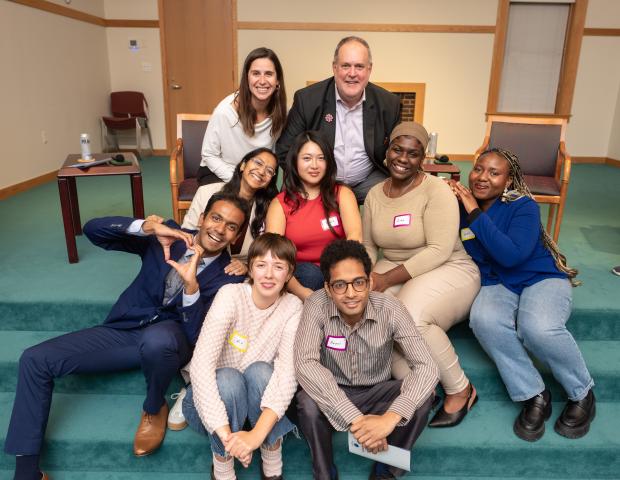
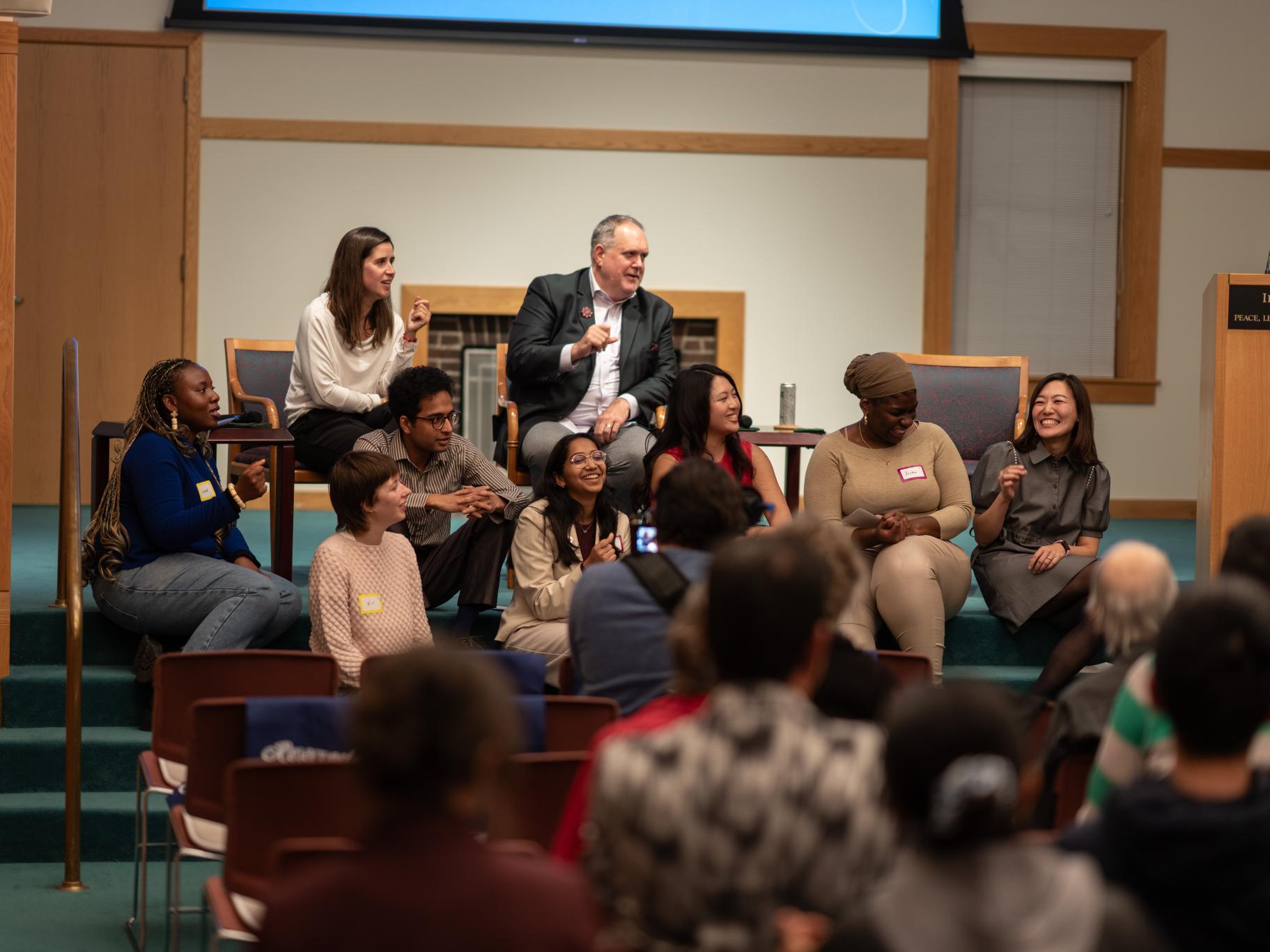
2026 Ikeda Forum speakers & Ikeda Center Youth Committee members
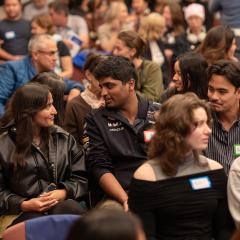
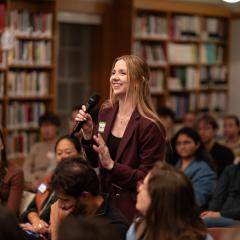
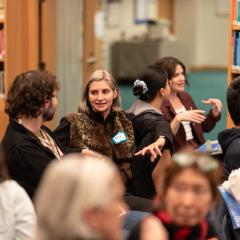
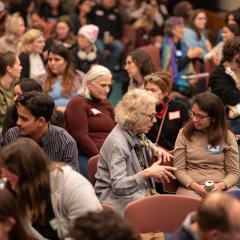
Just as our world is constantly evolving, so too is our understanding of what it means to be a global citizen. In the fall of 1996, Center founder Daisaku Ikeda delivered a lecture at Teachers College, Columbia University, titled “Thoughts on Education for Global Citizenship.” Now, exactly 30 years later, the Ikeda Center’s 22nd annual Ikeda Forum for Intercultural Dialogue revisited that talk, drawing out its implications for the world we find ourselves in today. More than 100 attendees were on hand for the discussion.
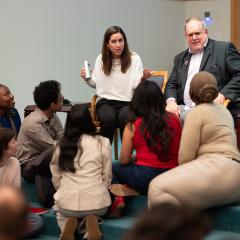
Called “A New Vision of Global Citizenship: Reimagining Education in an Age of Division,” the evening event featured a panel discussion followed by presentations from Ikeda Center Youth Committee members on what global citizenship means to them. The two panelists were Drs. Gabrielle Oliveira and Timothy McCarthy, both of Harvard University. Professor Oliveira is the Jorge Paulo Lemann Associate professor of Education and of Brazil Studies at the Harvard Graduate School of Education, where she focuses on immigration and mobility – on how people move, adapt, and parent across borders. Her many publications include the award-winning books Motherhood Across Borders: Immigrants and their Children in Mexico and New York City and Now We Are Here: Family Migration, Children’s Education, and Dreams for a Better Life. Dr. McCarthy is Lecturer on Education and Public Policy at Harvard, where, among several other positions, he is founding faculty chair of the B.R.A.V.E. Institute at the Harvard Graduate School of Education. He is also founding faculty chair of the Global LGBTQI+ Human Rights Program at the Carr-Ryan Center for Human Rights at the John F. Kennedy School of Government. An author of five books, his most recent is Reckoning with History: Unfinished Stories of American Freedom. Dr. McCarthy also has twice been named Professor of the Year by the Harvard Crimson. The panel discussion was moderated by Bhuvan Ravindran, an environmental lawyer and policy analyst. A member of the Ikeda Center Youth Steering Committee, he currently works at Pacific Environment, assessing and mitigating the risk of ship strikes on whales in the Arctic Ocean.
Daisaku Ikeda’s Vision
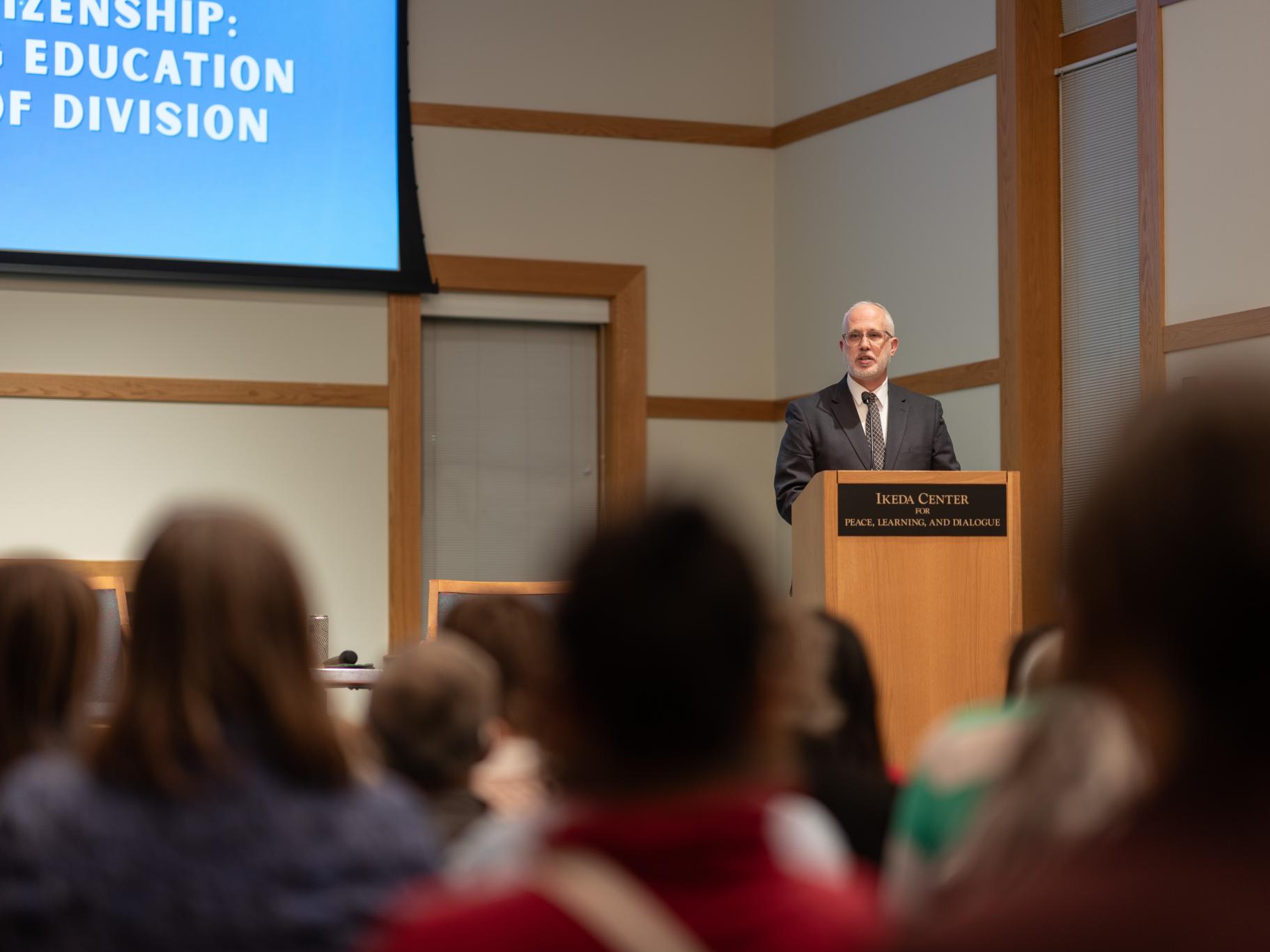
After offering words of welcome, the Center’s Senior Program Manager Lillian Koizumi, who moderated the evening, introduced Center Executive Director Kevin Maher. He opened his remarks by observing that the pre-event planning sessions with the speakers “brought to the surface many of the challenges educators are facing today, as well as the profound impact and tremendous potential of teaching and learning.” But more than that, said Maher, it was apparent that both are motivated “by a deep passion for your students and a strong commitment to their growth.” This commitment is joined by a “belief in the transformative power of teaching – its ability to deepen understanding of and appreciation for others, particularly those whose cultures, experiences, and perspectives may differ greatly from our own.”
Maher then described how this vision of global citizenship education resonates with that of Mr. Ikeda, who celebrated “the curiosity, empathy, and sense of shared responsibility that are essential in our increasingly interconnected world” – and which are at the core of Mr. Ikeda’s vision of peace. “Education,” said Ikeda,
must foster people who intuitively understand and know—in their minds, in their hearts, with their entire being—the irreplaceable value of human beings and the natural world. I believe such education embodies the timeless struggle of human civilization to create an unerring path to peace.
In the Teachers College lecture, Mr. Ikeda discussed three specific attributes that each of us can cultivate to become active global citizens in the cause of peace. These are:
- the wisdom to perceive the interconnectedness of all life,
- the courage not to fear or deny difference but to respect and strive to understand people of different cultures and grow from encounters with them, and
- the compassion to maintain an imaginative empathy that reaches beyond one’s immediate surroundings and extends to those suffering in distant places.
Before concluding his remarks, Maher noted that while Mr. Ikeda’s ideals “may seem aspirational,” they were forged in response to the era of early 20th century Japanese militarism. Witnessing the “devastating consequences” of this, he came to see education as the means by which we “could transcend national and cultural boundaries, recognize our shared humanity, and contribute to peace and solidarity.” Tonight, said Maher, we invite you to perceive global citizenship as “a challenge and an invitation” for us to accept as a mode of living, here and now.
Panel Discussion: Educational Oases
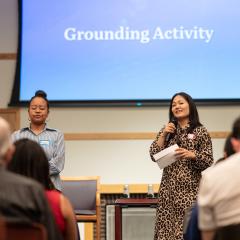
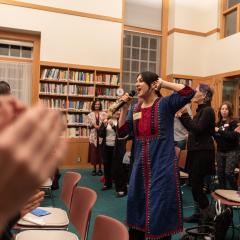
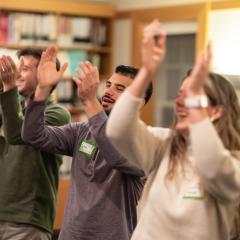
Before moving into the panel portion of the event, attendees engaged in a pair of activities designed to help everyone feel centered and alert and connected. First was a reflective exercise and paired activity led by Center staff members Preandra Noel and Anri Khare. This was followed by a singing activity led by Sukriti Dabral, a Boston-based social worker, educator, vocalist/communal singer, and community facilitator. Center staff recently encountered her at a peacemaking circle at Boston University led by Professor James McCarty. Dabral “led such a beautiful and deeply connecting singing circle activity,” said Koizumi, that “we knew we had to invite Sukriti to come and lead us in song again.”
With everyone now alert in body, spirit, and mind, Koizumi introduced the panelists and turned the floor over to the panel moderator, Bhuvan Ravindran. By way of introduction, Koizumi said that “his work is guided by a commitment to advancing a nature-positive world—reviving ecosystems, restoring connectivity, and embedding biodiversity in global policy and decision-making.” She also observed that “he cares deeply about others and the world, and truly embodies Mr. Ikeda’s spirit to treasure the person in front of him.”
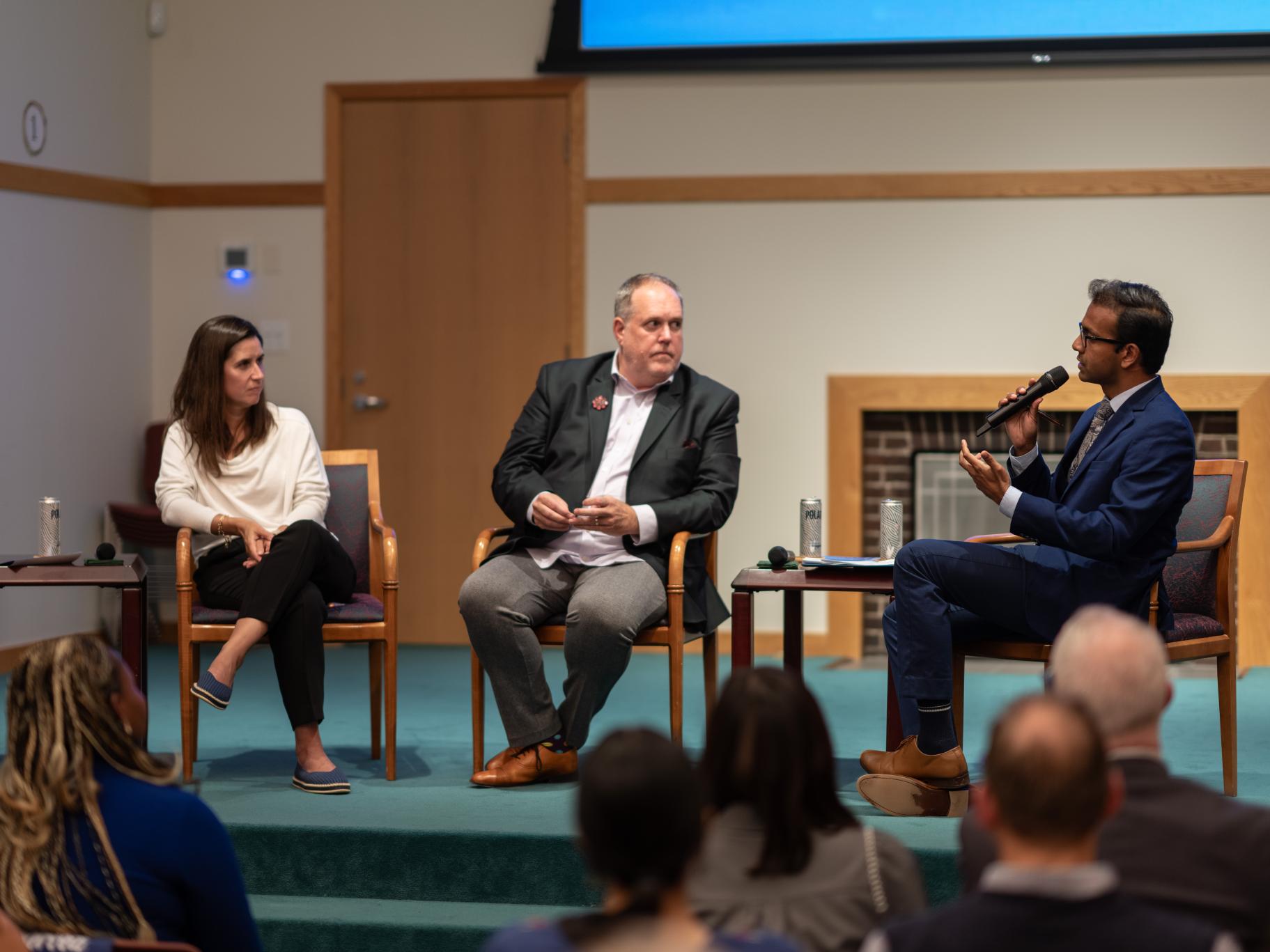
To frame the conversation to come, Ravindran opened by noting a “beautiful tension or inherent irony” in the term global citizenship. This is that with global citizenship there is an “appeal to a universality which seems very distant. But the place where it actually applies is with the person right before you.” So there is “a tension between what is distant and what is immediate.” To guide us through the tensions and questions of global citizenship, said Ravindran, we will turn to Professors McCarthy and Oliveira, who will reflect on their experiences as educators to help us understand global citizenship today. Crucially, said Ravindran, both refer to themselves as educators as opposed to teachers, suggesting that learning goes beyond the four walls of a classroom to include all our experiences of life. With that, he invited the panelists to share important educational experiences that have “had a deep impact on your life.”
To open, Dr. McCarthy said he always starts with his parents, both of whom were public school teachers. “I’m the only son and only grandson of factory workers and public-school teachers,” he said. Especially interesting was the example of his grandmother on “his dad’s side,” who was a “trailblazing educator.” One of 16 children of immigrants, when she learned her parents didn’t see education as something for girls, she ran away, “got a P.O. Box,” and pursued the education that enabled her to become a public-school teacher for 40 years in New York City. Essentially, said McCarthy, I come from a “kind of labor, justice, civil rights, peace family.” Next to family his most important influence was his mentor when an undergraduate at Havard, Robert Coles. Coles was a child psychiatrist, known for his deep and long-term engagement with children who have experienced social trauma.* When McCarthy was in Coles’ class called The Literature of Social Reflection, the professor was impressed with McCarthy’s reflections on his own family’s complicated grappling with race and personally encouraged him to become a serious researcher of race and social change in America.
Oliveira spoke of her experience as a Brazilian coming to the US for graduate studies and how her parents supported her in her journey. Describing their perception of education’s value she said that “the thing they always told my sisters and I is that nobody can ever take the education from you. Nobody’s ever going to be able to take that from you.” And “their goal with us was that we aim high. What is it that you’re interested in and, and what do you want to do?” Ironically, she said that now that she is a mother she finds herself emphasizing the practical side of things, such as whether the studies will lead to a job. She also spoke of what she has learned from her research with migrant mothers. What these mothers want to see from their children is not the results of their studies per se, but “Are you a respectful, thoughtful person that is going to school, that is respecting the elders, that is kind and that belongs to society in this way?” What she really learned, she said, is how much they link “dignity to education,” something, she added, that resonates with the philosophy of Mr. Ikeda. She also noted that she learned that living up to education’s potential to truly bring us all together, sometimes calls for “rebellion and resistance.”
Next, Ravindran asked Oliveira how, in this time of “many interlocking crises,” education might “ensure that these crises aren’t overwhelming, but in some way help foster the values of global citizenship.” In response she said she has been “thinking a lot about the potential that care can take on in the classroom.” To illustrate, she said that “in my favorite box that I have in my house are notes from former students, and I think it’s that daily reminder that if you show up as a caring person, authentically caring person, radically caring person, that you’re going to get that back in terms of that reciprocity that you set up in your place of work.” The more challenging side of the commitment to caring occurs in her decision to “bear witness” in her research and “to be with the children that were detained and incarcerated at the border.” When we expand the “network of people we worry about” it can take a toll, she said, but it “gives us the power to build that reciprocity.”
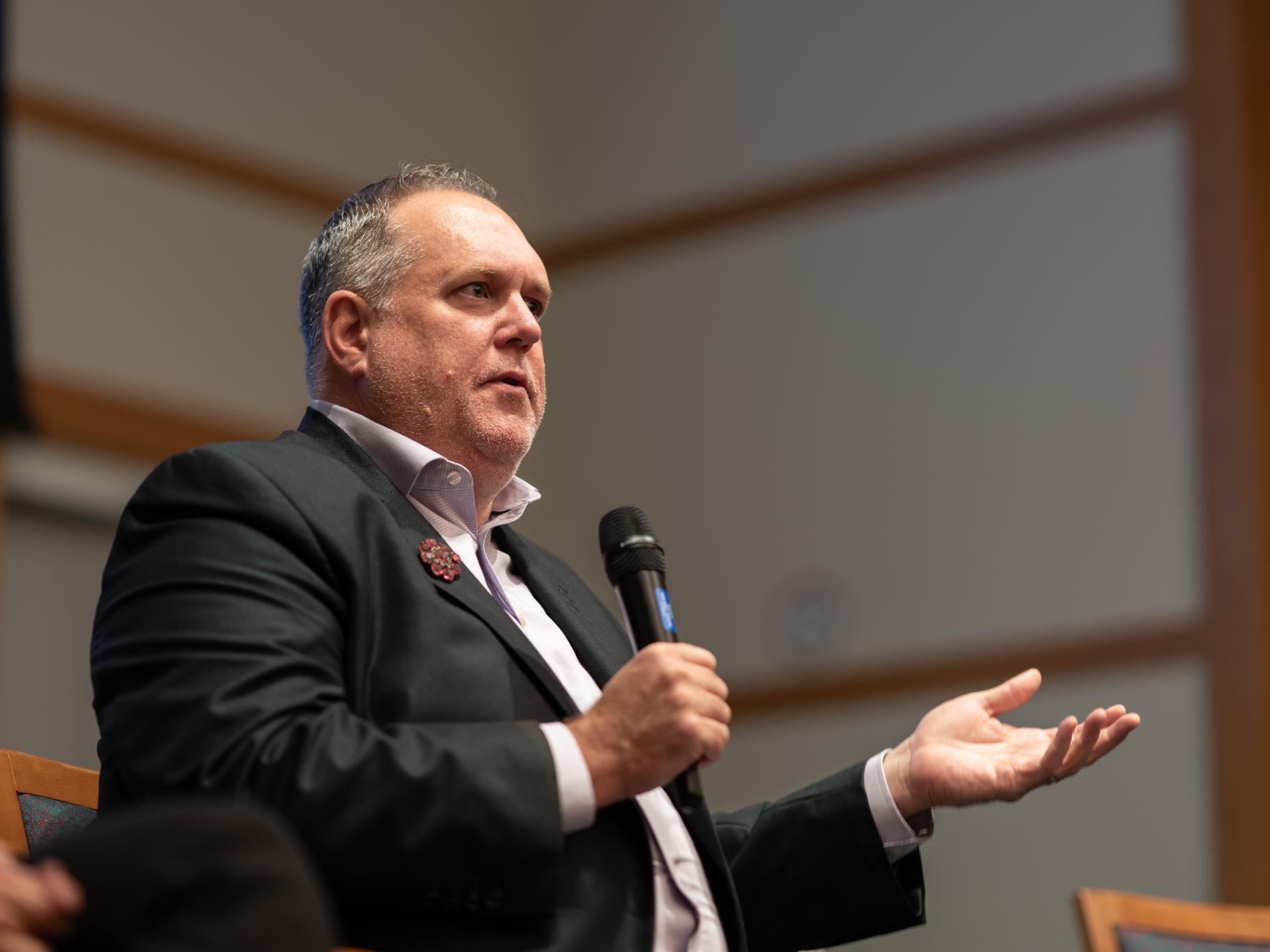
Turning to Professor McCarthy, Ravindran referenced Daisaku Ikeda’s emphasis on the “importance of inner work when it comes to fostering this ethic of becoming a global citizen.” How, he asked, can education advance this cause? And how can it help create that “caring space” that Dr. Oliveira spoke of? “Well,” he said, “I think you have to show up as a human being, and a full human being, with your students, which means that you don’t know everything. You’re not perfect. You’re gonna have a bad day. Maybe you’re sharing some of the struggle and trauma that they’re experiencing too, in different ways.” Truthfully, he added, in this country “people are tearing things apart, tearing each other apart,” so “I keep coming back to the question ‘How can we take care of each other?’” This can happen in classrooms, he said, and “classrooms are everywhere.” There’s always the opportunity to “build something together,” or “to learn from each other.” Getting into some of the specifics of his work, he mentioned that he is encouraged by his Zoom-based “global LBTQI human rights program.” In it, human rights activists and “defenders” from all around the world – including in places where “they are literally illegal” and they face continual threats – have been able to create “these oases, these sanctuaries, which are also deep and profound learning spaces where we’re gaining wisdom.” Above all they are “holding each other in compassion in a way that represents the essence of that definition of global citizenship.”
Building on this notion of educational spaces as oases, Ravindran asked Dr. Oliveira how “education can become a lens for students to put their own experiences into perspective. For example, if there are students migrating across borders, they will feel out of place.” Given this, how can education help them to “uplift their lives.” Certainly, said Oliveira, among migrants “education holds this very, very important place that means mobility. That means that you can break intergenerational trauma. You can break intergenerational poverty.” Yet this is fraught with challenges, she said, not least in the case of mothers who migrate to make money to improve their children’s prospects, leaving families to endure the pain of separation. For the children who arrive in the schools of the United States, opportunity and uncertainty coexist. This is why, said Oliveira, the “high expectations” teachers hold for them must be built on a foundation of trust. And also of encouragement, with teachers saying, “I believe in you. I believe you are smart, you’re intelligent, you’re capable.” The other major challenge is that of assimilation. Oliveira said that the most productive way to think of this process is in terms of “inclusion, and belonging, and participating.” Fundamentally, the question is: “How do we think about the presence of immigrant children as an asset? As a very important piece of our society, as something that is a good thing to have?”
Here, Ravindran raised Mr. Ikeda’s conviction that “communities are laboratories for global citizenship, laboratories of action,” adding that he “calls the community the world in miniature.” How can we best realize global citizenship in our neighborhoods “and the places that we actually live” to realize global citizenship? In response, Dr. McCarthy said that he comes from “a mutual aid tradition, where you provide what people need when they need it, unconditionally. And if you have resources of some kind, like a truck or a car to get someone to wherever, or food that you have extra of that other people don’t have, or clothes,” then you provide that to the best of your ability. “I think mutual aid is the kind of manifestation of the idea that a neighborhood or a community is the world in miniature,” he added. In his own life, he experienced this in his role as resident dean at Harvard’s Quincy House, where he advised and assisted students for 25 years. Now, in his home of Provincetown, people of all kinds are banding together to assist people unfairly or improperly detained by ICE, as well as to prevent it from happening. This is “mutual aid as resistance,” he said.
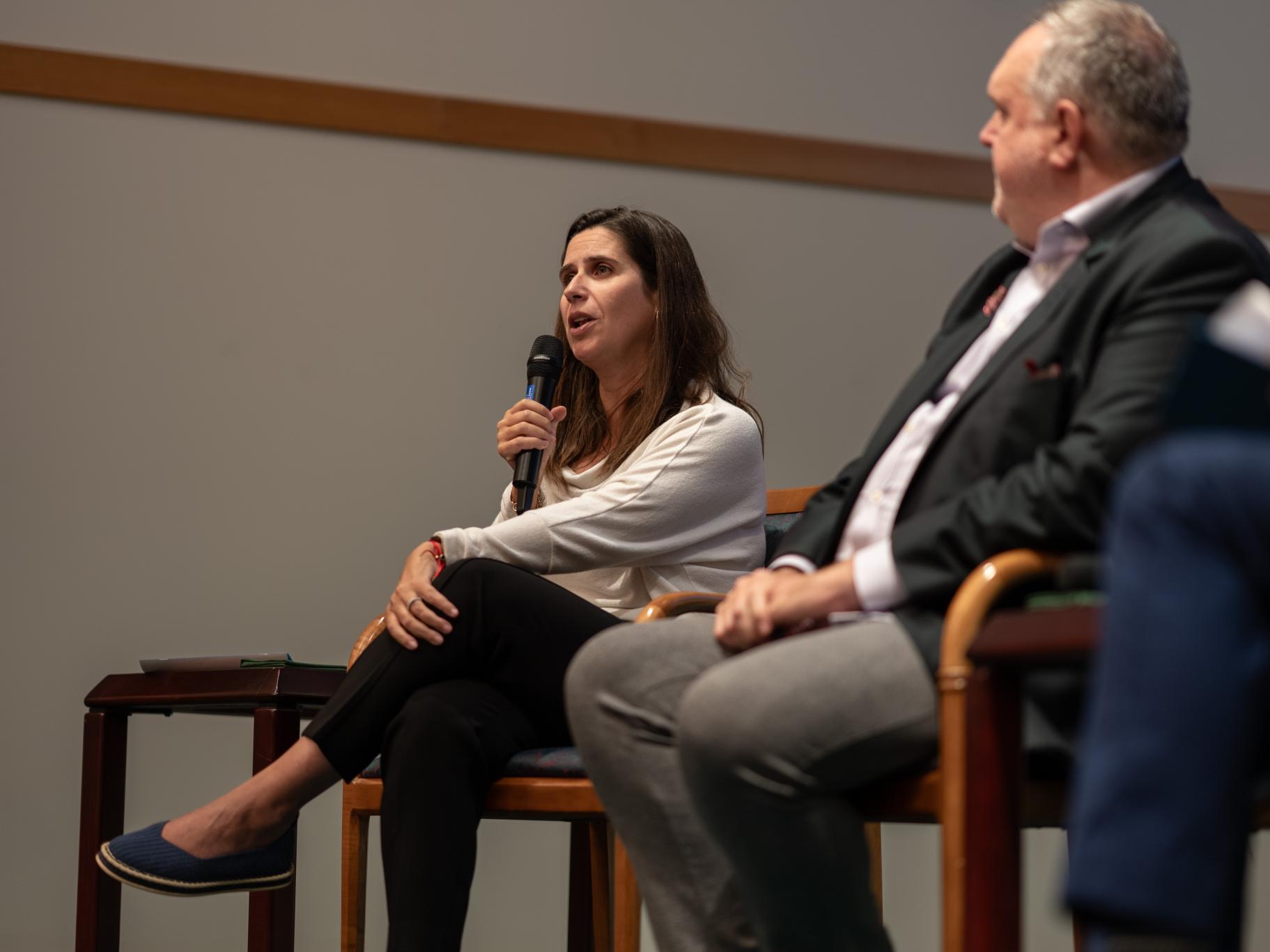
With only a short time left, Ravindran asked both panelists what they see as the way forward for global citizenship and whether in the 30 years since Ikeda’s lecture we have moved forward or back? McCarthy said that, speaking as a historian, “I don’t believe in the teleology of progress. I don’t believe that any progress is inevitable or irreversible.” In what he calls the “paradox of progress,” every gain in arenas such as human rights are inevitably met with a backlash. In his own domain of LGBTQ rights, the backlash shows that “we’ve posted some wins” and that we are “a worthy adversary.” This is why we “keep dreaming and working simultaneously.” Saying she’s not normally a “glass-half-full” type, Oliveira nevertheless wanted to offer a hopeful perspective. Referencing her work with children, “I just feel that while we put a lot on the younger generation, [and] we keep saying that they’re going to solve all of the problems that we messed up — which is not fair — at the same time, I believe that they’re also growing up being exposed to and knowing things that maybe some of us didn’t know when we were growing up, and I want to believe that that’s going to make a difference also in the future.”
During a brief Q & A session Dr. Oliveira responded to a question from a person who works in immigrant legal services, including getting people released from ICE detention. What, she wondered, are the programs that help immigrants feel “less embarrassed” in their new communities and help them with challenges such as literacy? In terms of literacy, said Oliveira, the best thing for youth to do is, if possible, to attend schools with bilingual programs. In the absence of these programs, even just having somebody in the school building whether it’s a teacher or school staff that can speak the student’s language makes a huge difference. In terms of more wide-ranging help, she said she has been impressed with a model in New York City called the Dream Squad. These are educators and leaders from the community who function as “a first stop for families.” If you need a doctor, or if you need a lawyer, you can go to them “without feeling like you are being ostracized or segregated.”
Then to wrap up the session, each panelist responded to the intriguing query of “what rabbit holes have you been finding yourself going down lately?” For Oliveira, the answer was easy: youth sports. She’s hoping to bridge the paradox of immigrant children often being seen as “assets” on the playing field, but “problems” in the classroom. After a moment’s thought, McCarthy said that he has been thinking about the phenomenon of liberatory artwork appearing spontaneously on the literal walls that divide us, from the Berlin Wall to Northern Ireland and Israel-Palestine. It was in this latter circumstance, “on the Palestine side of the dividing wall” that he encountered the words, “Love Wins, which was the tagline of the marriage equality movement” here in the US. It revealed that impulses for freedom and dignity are global in nature and scope.
Youth Global Citizenship Reflections
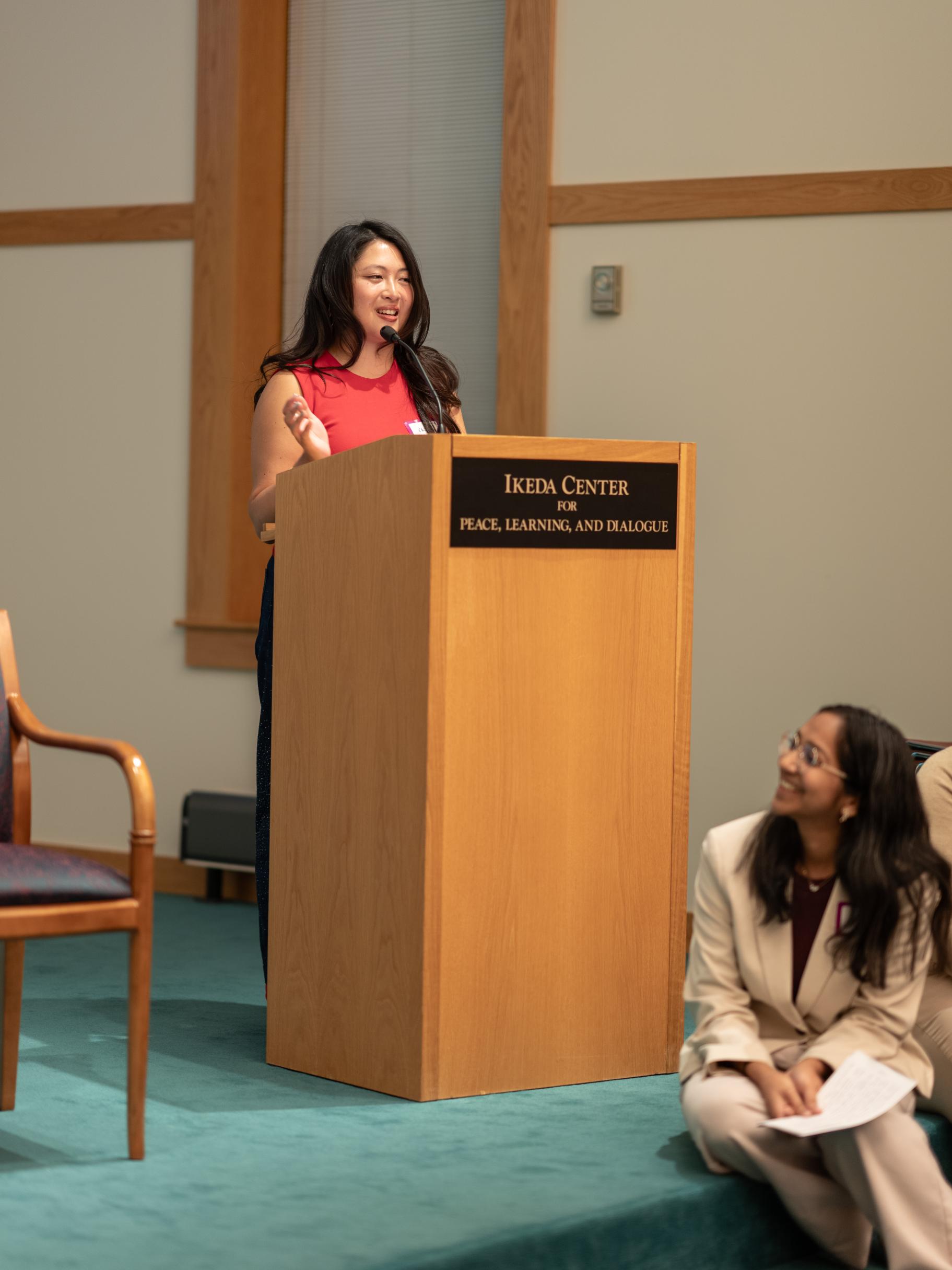
“If you’ve been to an Ikeda Center event before,” said Lillian Koizumi, “you’ll know that highlighting youth voices is central to our work, so every year we invite our youth committee to engage with the forum theme and share their findings in ways that resonate with them.” This year, Center staff met with them and studied Mr. Ikeda’s 1996 lecture together. Introducing the presentations, Ravindran said that “each of the participating youth committee members will introduce themselves by sharing a photo that represents global citizenship to them, along with a question they’ve been grappling with from reading Ikeda’s lecture.” These questions, he said, will then form the basis of paired discussions among attendees.
Lanre Adeyanju
Lanre’s photo showed her with two missionaries from Utah, whom she encountered going to an acai shop in a Boston suburb. The experience of missionaries working within rather “across countries,” she said, “made global citizenship feel much closer to home and reminded me that connection, service, and learning from others can happen anywhere.” And it led her to contemplate “how being a global citizen has less to do with how far we travel, and more to do with how deeply we choose to connect with, learn from, and care for people in and beyond immediate close friends and family circles.” Based on these reflections her final question was: What does it mean to be of service to people that I might not have a direct, close connection to, yet still care as deeply as I would for someone I know personally?
Sasha Ndam
Sasha’s photo was a portrait of her best friend, who tragically died at a young age. She chose this because “that was a pivotal moment in my life where I began questioning what is the purpose of life, and what it means to live a meaningful existence.” Among the teachings of Daisaku Ikeda that have brought her consolation is his conviction that we benefit when we correctly position death “within a larger living context.” Reflecting on her friend’s death, the invaluable lesson she takes away is that “talking about death for some can be a taboo topic but I think it connects to global citizenship because it is a universal experience that brings together diverse perspectives, beliefs, and feelings.” Based on these reflections, Sasha’s final question was: How can we use difficult/painful experiences to connect with others in a way that fosters hope, understanding, and friendship?
Swapnil Mishra
“I chose this photo,” said Swapnil, “because it’s from my high school years, when I attended a boarding school and met people from all over the world. It was my first real experience of what it meant to be a global citizen and taught me to appreciate both our similarities and differences. It also showed me how dialogue can break down barriers. As we get to know others, we develop greater empathy and compassion for them.” At a fundamental level he now wonders how people who once were strangers can become those we genuinely care about. One thing is crucial to that process, and that is time, which “allows us to see people more fully and develop deeper empathy for them.” Based on these reflections, Swapnil’s final question was: What constitutes our definition of “I”? Does “I” refer only to ourselves, or does it extend to the people close to us, our communities, our cities, or even the world? What does “I” mean metaphorically, and how far does our sense of self extend?
Shreya Goel
Shreya chose her photo to illustrate Mr. Ikeda’s third principle: the ability to compassionately develop the imaginative empathy to extend to those suffering in distant places. The artwork shown in her photo, she said, is called The Witness Blanket, and it “brings together stories from survivors of racial, colonial, and indigenous oppression in Canada, and weaves them together to form a blanket of the interconnectedness of all life.” The blanket consists of reclaimed objects that represent particular injustices. When we engage with the blanket, said Shreya, we “bear witness” to difficult truths, thus enacting Mr. Ikeda’s call to not “fear differences,” inspiring us to “courageously take responsibility for the future.” Based on these reflections, Shreya asked: What does it mean to truly “bear witness” to suffering that is not our own—and when does witnessing become responsibility?
Chiara Lam
Chiara’s photo depicted an art project she has been engaging in with friends that has no other instruction or intent than to create a work full of flowers. She noted that the flowers are unique and “look so different from each other, yet all together they have birthed the most beautiful garden.” This suggested to her that “this is what being an active participant of the world feels like, adding your own unique qualities to those of others to make something beautiful.” And it also reminded her of the ancient Southern African philosophy of Ubuntu, which insists that “I am because you are.” We are all connected, she said, “and we cannot exist alone.” Based on these reflections Chiara’s final question was: Can you remember a time in your life when someone different than you had an impact on your life? Can you remember a time when you felt connected to someone different than you?
Viv Suhanosky
Viv shared a photo that captured her and her “wonderful coworkers” in a happy mood – adding that the shift that followed was not at all a good one! With the photo she wanted to “emphasize that the spaces where we spend the most time in, maybe with people we’ve overlooked or written off, are the best places to begin understanding global citizenship! There is no better place to begin than where you are right now.” Specifically, at her job, in dialogue people begin to open up about their homes, or where they are from, and “walls begin to melt.” For her, “listening to someone share their life, with such a fierce desire to be understood, never fails to connect me to humanity. Dialogue is the stepping stone to global citizenship.” Based on these reflections, Viv asked: What’s your favorite way to start a conversation when you’re hoping to connect? What do you love to hear from people, and what do you love to share?
Conclusion: Being in the World Together
After attendees engaged in their paired dialogues on the questions generated by the youth committee members, there was just time enough for a closing song led again by Ms. Dabral. Reflecting on the evening’s discussions, Dabral shared that there was a recurring theme for her, which was that “any interaction is educational if we have the framework and mindset, and that there’s something about care and love that is really instrumental.” Inspired by this, she recalled a song by artist Lyndsey Scott which included a line from bell hooks that goes: “Anytime we do the work of love, we end the work of domination.” As she led the attendees in singing this line a few times, Dabral added her own twist at the end: “Anytime we do the work of love, we are the work of liberation.”
To officially wrap up the evening, Koizumi invited brief concluding reflections from the panelists. Speaking first, Oliveira said “I’m just so grateful. And I’m so grateful for every part of this event. And I had no idea how it was gonna go, and every part is so meaningful.” In particular, she said, “I was very moved by the youth committee and your reflections — and just what you offered with the pictures and the questions makes me be full of hope because of how you’re able to articulate something that can be so complicated and isolating.” Picking up the theme of youth, McCarthy echoed his earlier observations, saying that over these last, difficult years, he has valued the sense of creating oases of encouragement and healing with his students. Crucially, he said, “young people are the ones that always manage to figure out how to keep doing that work when the old folks are weary. And doesn’t mean you’re not weary too. We’re all in the world together. So let’s be in the world together because if we’re in the world together and we create those spaces, we can build a different world together.”
Notes
* The child who inspired Coles in this pursuit, Ruby Bridges, was renowned for her role participating in the NAACP’s efforts to integrate the New Orleans schools in 1960, a process during which she suffered racist abuse. Coles was in New Orleans at the time and offered to provide counseling for Ruby, meeting weekly in the Bridges home. At the time, Coles wrote about the experiences of Ruby, along with both her black classmates and her white classmates who participated in integration, for the Atlantic Monthly. He developed these articles into his first book, Children of Crisis: A Study of Courage and Fear. This turned into his life’s work, which he communicated in a series of books called Children of Crisis, which profiled the thoughts and experiences of children in diverse zones of social trauma.